112 Weddings,
Directed by
Doug Block,
92 minutes, 2003, USA
Doug Block is a videographer. He shoots weddings of total strangers and delivers
the videos. Then he never sees the happy couples again. One day he begins to
wonder what happened to all these people he filmed after they lived together.
Were they still in love?
He contacted 112 former clients and asked them how their lives were now. Did
their marriage turn out as they dreamed it would? The response is often
surprising and very frank.
Although Block’s film is favors the down-side of marriage, it definitely
explores the lives of people and the challenges and conflicts they have faced
over the years. Marital bliss seems to be strongest the day of the wedding.
After that, a new reality sets in. Block asks couples how they have managed
living with another person and how their lives have changed. Women no longer
want to be stay-at-home moms. We see how the addition of children affects
marriages and what compromises are made. Small grudges grow until couples drive
each other nuts.
Block explores less traditional marriages, a partnership ceremony instead of a
legal one, and same sex marriages. An articulate rabbi attests that marriage is
not a perfect institution. He talks about the economic reality.
And despite all the pre-wedding planning, things can go wrong… a caterer calls
and cancels three days before the event.
But there is also humor – like the guy who shows up for his wedding wearing a
long, t-shirt-looking white, unfashionable top and tennis shoes, or the
question: Will you still love someone when their teeth are gone
And there is sadness – when a child or parent becomes ill. A man tells of the
time he went berserk and spent $7,000 on books in three days.
The dynamics of two families coming together – the relatives from different
backgrounds… is also interesting.
In 112 Weddings, “happily ever after” is perhaps wishful thinking….
If you are married, divorced or thought about either, you might want to see this
film.
Block explores the “mystery” of marriage and many not so happy endings.
With humor and an affinity for people, Polish born (1970) Stanislaw Mucha traces
American pop artist Andy Warhol's family roots back to two small villages in
Eastern Europe. Warhol sent some of his art work to his relatives who didn't
really know what to do with it.
His eccentric relatives are proud their connection to him, and he has become a
legend.
"Absolut Warhola" takes us
on a journey to the grass roots of the infamous Warhol.
Mucha's other documentaries include "Die
Mitte" (The Center) and
"Mit Bubi heim ins Reich"
("Back Home to the Reich, with Bubi").
Duisburg:
Audience Award, 2001.
Mannheim Audience Award, 2001.
Berlin: Best Upcoming Director & Best Upcoming
Cinematographer from the DEFA Foundation, 2001.
Society of German Film Critics: Best Documentary,
2002.
Ai
Weiwei: Never Sorry
Directed by Alison Klayman, 91 Minutes, 2012, USA
Cherish the freedoms you have.
Artists in China are often put in prison for what they say and do. Weiwei is
one of them. He challenges the Chinese government more than anyone. He's
famous for this. He speaks with his art and uses the Internet to spread his
ideas. He used to write a blog every day. When the Chinese shut that
down, he moved to twitter - posting messages eight hours a day.
"Never Sorry" is a demonstration of pure will and courage. Weiwei doesn't
apologize for what he does. He provokes, he prods, he defies. "If you don't
push, nothing happens," he says.
"Life is more interesting when you make an effort."
He collected the names of all the children who died in the 2008 Sichuan
earthquake and turned the list into a work of art. Volunteers helped
him collect the names of the dead. Over 5,000 students died. Poorly
constructed buildings crumbled.
Weiwei knows he has to work through the system. "You can't just say it's
flawed," he insists.
The Chinese police follow him everywhere.
He has ideas and engages others to implement them as works of art. He
calls them his
"hired assassins."
For the Beijing Olympics, he helped design the "bird's nest, "
Beijing's National Stadium.
As an independent artist, his work is being shown in Australia, England,
Germany, Japan,
North and South America, and beyond.
He knows the more he challenges the authority of the Chinese government, the
harder his life will be. But Weiwei is an optimist. He's still excited and
exuberant about life.
Aislin:
Dangerous When Provoked
The Life and Times of Terry Mosher, Directed by
John Curtin, 43 minutes,
2006, Canada
Produced by Kaos Productions Inc.
In Association with The Canadian Broadcasting Corporation
This Gemini Award-Winning "Best Biography Documentary Program" focuses on
Terry Mosher, aka Aislin,
often called the nastiest political cartoonist. At the edge of his pen, no
one gets out alive.
The film reveals little known aspects of Mosher's life, from his early days in
Ottawa, to his adventurous ramblings, hitchhiking across North America as a
young man, looking for something interesting to do with his life. He finally
decides on art school, leading to a job with The Montreal Star as a cartoonist,
and then with The Gazette. The rest is history.
Yves Saint Laurent is known for his fashion designer clothes.
But not everyone knows about his partner Pierre Bergé,
who managed Saint Laurent’s business.
When Saint Laurent died in 2008, Bergé arranged for the contents
of a virtual museum of artifacts in the house they shared
to be sent to Christie’s to be auctioned off.
The “Collection” is the centerpiece of the film that tells the story of their
life together for half a century.
They had money to buy art work and for 20 years that’s what they did.
Saint Laurent introduced the trouser suit for women.
His modern clothes were not just to beautify
but to add confidence.
Despite his success, Saint Laurent faced a battle with drugs and depression,
eventually forcing him to withdraw from public life.
Fame brought suffering.
Like most relationships, that of Saint Laurent and Bergé had its
ups and downs. The film covers a lifetime of fashion shows,
adulation, and a house full of art objects conveyed through old films,
photographs, and reminiscences.
Their lives were intermingled with Andy Warhol, Mick Jagger, and the most
gorgeous models of the time.
The fashions included a dress that looked like a Mondrian painting with a red
square and black bars.
We watch as the art objects are dispersed - sent on their way to a new life
“like birds - to perch elsewhere.”
The collected paintings, sculptures, vases… remnants of a life – sold for
millions of dollars. Trailer
Annie Leibovitz is one of the
best known contemporary photographers. From her “Rolling Stone
Magazine” days hanging out and photographing the rock ‘n’ rollers of the
70s, to her entry into the fashion world at Vanity Fair and Vogue, her
images have been strikingly unique, as well as elaborate and elegant. The film is a
panorama of stars: Bruce Springsteen, Mick Jagger, Hillary Rodham Clinton,
George Clooney,
Mikhail Baryshnikov, Arnold Schwarzenegger, Demi Moore…..
But there are also home movies, pictures of Leibovitz’s family. The
film follows her from her early days at the San Francisco Art Institute
where she was a painting major and wanted to be an art teacher. Then
she took a photo workshop… the rest is history.
Working with large teams of technicians and set designers, Leibovitz directs
with authority. She has a reputation for being difficult. In the film she’s
identified as “Barbra
Streisand with a camera.”
Note: Leibovitz was recently in the
news after she borrowed $15.5 million, due to financial problems. She put up
as collateral several houses and the rights to all of her photographs.
The strange works of small-town politics is revealed in this bizarre documentary
focusing on an upcoming mayoral election. The incumbent Republican mayor is
legally blind, his Democratic opposition looks like he belongs on "The
Sopranos," and the independent candidate has limited sight due to a brain tumor
that was removed. Minneapolis-St. Paul
International Film Festival: Emerging Filmmaker Award.
Trenton Film Festival: Best Director, Documentary
Film
Long Island Film Festival: Best Documentary
Staten Island Film Festival: Best Documentary
Advertising people are some of the most creative people around. Where do
they get their ideas? Everywhere. "Being a creative person, you don't know
where your thoughts come from, and you won't know where they will come from
tomorrow."
iPod Billboard, the work of Lee Clow and TBWA
Photo by Michael Nadeau
"Art and Copy is an inspiring film. It makes
you want to take risks, to try new things.
Sometimes the simplest images work best. Look at the Volkswagen ads: a red
car and sometimes only a few words: "Everyone's getting the bug."
After the war, German cars were hard to sell. Good advertising was essential.
Esquire Magazine covers tried to indicate something exciting was going on:
They put a Black Santa Claus up front. Advertising was changing the world and
culture. Advertising can be revolutionary and subversive.
Cliff Freeman of
Cliff Freeman and Partners, collector of vintage radios
and the man who created Where's the beef? for Wendy's
in his New York City office
Photo by
Chris
Glancy
"Art & Copy" focuses on interviews with
the top ad men and their groundbreaking ads. There's George Lois of Heublein, Inc. To
advertise Maypo, a maple flavored hot mush breakfast cereal, he came up with the
idea of cameo shots of star athletes: Baseball player Mickey Mantle holds a bat
and says, "I want my Maypo." Footballer Johnny Unitas says, "I want my
Maypo." That's it. Very simple. It worked. Sales shot up. Millions of kids across America
began yelling, "I want my Maypo!"
Cinematographer
Peter Nelson, Adman George Lois
and director Doug Pray at Lois' childhood home in the Bronx, NY
Photo by Michael Nadeau
Art and Craft,
Directed by Sam Cullman,
Jennifer Grausman, Mark Becker 89 minutes,
2014,
U.S.A.
Art and Craft is a film
about obsessions. Whether it's
Obsessive-Compulsive Disorder (OCD) or just a
love of collecting miniature ceramic cows, many
of us have had similar experiences, but perhaps
not to the extent of Mark Landis, an extremely
talented forger of famous works of art.
What distinguishes him from ordinary criminals
is that he does not financially benefit from his
art creations. He gives them away - to
museums all over the country: Chicago,
Memphis, Washington, Kansas City, Oklahoma City,
Cincinnati, Jacksonville - 46 museums in 20
States, offering over 100 pieces. He likes
seeing his work on display.
When he calls a museum to make an appointment,
he makes up stories about an Emily, a sister who
has an extensive art collection, saying that
she is visiting his mother who has a home in
Paris. He's good at telling stories.
Landis says, "Everyone
was so nice that I was soon to get into the
habit of donating pictures to museums. Being
treated so nicely by people was something I was
unfamiliar with and I liked it very much."
He
calls himself a philanthropist, and museum
aficionados welcome him with open arms. Landis
obviously gets a buzz out of duping people, and
he has hoodwinked some of the best -known
institutions in the United States.
He gets away with this because he's actually a
very talented artist. His limitation is just
that he doesn't like creating his own original
art; he likes copying artists. The only real art
he has created is an excellent portrait of his
mother, whose death has taken its toll on him.
He's 59-years-old now, a willowy man who doesn't
seem to have any friends. His obsession keeps
him alive and gets him out in the world.
Landis, an
only child, was often left alone in hotels by
his parents who travelled extensively and liked
to go out. He loved watching TV. His
favorite musical was "How to Succeed in Business
Without Even Trying." He insists, "Ethical
behaviour never pays off." At times he dresses
as a priest. He explains that he learned
how to be a holy man from the BBC TV series
"Father Brown." He certainly could have
succeeded as an actor.
Landis
introduces us to his methods of creating works
of art, starting with shopping at Wal-Mart for
supplies and inexpensive picture frames.
He dirties up the frames by adding coffee stains
to the back so that they will look old.
His everyday
life exists in a small apartment filled with
works of art with papers scattered on the floor
everywhere.
When he plans on going out, he hides his wine in
a vintage Phillip's Milk of Magnesia antacid
bottle and takes it with him.
Landis' downfall occurs when an overly-avid
museum employee becomes obsessed with tracking
him down. But don't be fooled by this
discovery. Landis is too smart to let this
get him down.
Art and Craft is a confounding documentary of
one of the most unusual characters you will ever
meet. It's a must see. Even fake
reality TV couldn't come up with something this
bizarre.
From 7-year-olds playing
baseball, learning the rules of the game, to 60-year-olds playing
slo-pitch softball,
BASEBALL GIRLS
explores the private and professional lives of women obsessed with
the sport they love. Using animation, archival stills and
live-action footage, this zany and affectionate feature documentary
details the history of women's participation in the largely
male-dominated world of baseball and softball.
Battu's Bioscope, directed by
Andrej Fidyk, 58 minutes, 1998, Poland
Battu's Bioscope focuses on a roaming cinema
truck carrying a film projector throughout rural India. Battu, an ageing
cinema fan, and his assistant, Mama, take popular Bombay films 'to the masses.'
Many have never seen movies before. The film satirizes Indian cinema.
The
Grand Prix in Strasbourg; San Francisco International Film Festival, The 1998
Golden Spire; and Banff 1999 Special Jury Prize.
Being Mick: You Would If You Could
Directed by Kevin Macdonald, 60 minutes, 2001, UK
I’ll bet you’ve wondered what Mick Jagger does everyday when he’s not performing
with the Rolling Stones.
“Being Mick” is a
behind-the-scenes revelation trailing the life of Mick Jagger over a short
period of time. It’s a great documentary/home movie: free-spirited and
delightful. There’s some old, grainy black and white footage, mixed with lively
colour scenes, and Jagger shot some of the images himself.
Jagger has
seven children with four women.
It’s difficult to keep track of all of them. He lives next door to his ex
Jerry Hall: his and her houses. They can enter from either door. One of his
teenage daughters instructs Jagger, “Don’t bring anyone home younger than me.”
We presume he has done this before.
Jagger talks
about loving to do other things besides music. We see him having fun playing
with his kids and trying to watch a cricket match while fans keep bothering him
for autographs. When Jagger attends an event, there are mobs of fans waiting
for him. He stops to sign guitars or papers shoved in his face. He greets a
long line of fans with “Hi There.” When a reporter asks him what he’s wearing,
he has no idea. He looks at the label inside his jacket. He doesn’t like being
engaged in inane conversations.
In 1995, Jagger founded Jagged Films with
Victoria Pearman to create his own projects, including “Being Mick.”
We see him on set with
his first feature, directed by Michael Apted, about WWII and a code breaking
centre. At the premiere. Kate Winslet, one of the stars, doesn’t show. We’re
told, “She’s not afraid of terrorism, she’s terrified of the British
Press.”
Jagger has style. Everything he sings sounds great, and he wears multi-colored
socks.
Jagger was born
in 1943. He still has tremendous energy and a very busy life. He exercises to
keep in shape. People think he has the same energy all the time – like when we
see him on stage. Reality doesn’t have the same attitude. He has to work to
keep in shape. We meet his father, an ex-physical education teacher. Jagger
considered being a school teacher. That’s what his parents and grandparents did.
We see him
examining books in a rare book store. He buys some presents for his kids and
ex-wife Jerry Hall: $5500. Life is different if you are a multi-millionaire.
Music is still
very much a part of his life. It’s inspiring to see him work seriously on his
music in recording studios or constantly writing songs. His writing is stream of
consciousness. He explains that everything slows down if you write straight
prose.
And we see him with an array of musicians: Bono, Elton John, Pete Townshend,
Lenny Kravitz and Wyclef Jean. One recording session is at singer-songwriter
Lenny Kravitz’s house in Miami. About the décor, Jagger says,
“Kravitz’s house is like walking into a 1960s Sci-Fi film.”Jagger adds, “There’s two things to do in Florida: Go to Disney and look
for alligators.”
Lenny Kravitz, Mick Jagger
Activity is
constant. It looks like Jagger is having fun. His life is full.
Review by Lois Siegel
Bill Cunningham New York,Directed
by Richard Press, 84 minutes, 2010, USA, France
Bill Cunningham is a fashion guru. But you
wouldn’t know it if you saw him on the crowded streets of New York City riding
his bicycle, dodging traffic.
And you would never imagine that he’s a fashion photographer, capturing images
of high society men and women as they rush past him on the street. And you
would be surprised to learn that he’s a veteran New York Times columnist,
besides a photographer. Bill Cunningham is 82-years-young. And he never
slows down.
He focuses on trends and how people dress. And he still shoots film in a
Nikon 35mm camera. None of that digital stuff for him. His photo pages are
filled with
fashionestas.
Each picture layout has a theme. One might be all legs and shoes,
another baggy pants, or men in skirts. It took awhile for the Times to allow
images like guys in drag on their pages.
“Shooting in a blizzard is the best time for photographing – people forget about
you,” Bill says.” They’re too concerned with the blizzard. If you ask him what
he does, he says, “I photograph life.”
Bill Cunningham is articulate, and he knows
the history of fashion. He sometimes catches fashion designers ‘stealing’ ideas
from decades earlier. They are mortified when Bill juxtaposes their ‘new’ design
with one he posts from the past.
You can always spot Bill on the street.
He wears a cheap, blue jacket mended with duct tape.
People seem to love posing for him. “We all get dressed for Bill,” Anna
Wintour, editor of American Vogue says. He has documented her since she was 19.
Besides prowling the streets for interesting
images, he also covers evening events - photographing galas. Invitations are
piled high as he chooses among them what he will cover; he likes photographing
his favorite charities best. Bill could be wined and dined. People are
always offering him food and drink. He refuses. “I eat with my eyes,” he
insists. He doesn’t want luxuries to influence his work. He keeps a distance to
be more objective.
And he would never be a paparazzi. He
prefers to be invisible. “I’m not interested in celebrities with free dresses,”
he explains. “I’m not interested in the spectacle.” Bill loves the clothes.
“He who seeks beauty, will find it,” he says.
People don’t know much about Bill
Cunningham’s personal life. We learn that he lives in Carnegie Hall… one
of the few artists left living as residents in the building, and he’s about to
be evicted because the management has more important corporate concerns.
Bill lives in a tiny room jam-packed with file cabinets…. filled with negatives
of every picture he’s taken. There’s a bathroom down the hall, and he has never
owned a TV. He eats in simple, down-to-earth places, like cafes.
When Bill was young, he designed hats. He goes to church every Sunday. When
asked what he did in church as a kid, he said, “I looked at the hats the women
were wearing.” His family was working class Catholic. They didn’t think fashion
was a manly thing to do.
“I’m just this crazy fanatic,” Bill laughs.
Bully
Directed by Lee Hirsch
100 Minutes, 2011, U.S.A.
Bullying seems to be rampant in our schools.
And it doesn't seem that much is being done
about it. Administrators often turn a blind
eye because it's not something easy to deal
with or prevent. Parents feel helpless. The
result is devastating. Kids commit suicide.
"Bully" introduces five victims. We meet the
parents who have lost kids, we see the kids
being bullied, we feel their pain.
Mental abuse prevails. One kid is called
Fish Face, another is called a faggot.
Alex
We get the impression that in small towns in the
country, in bible belts, any kid who is
different is doomed.
Social media is now used as a weapon. It's as
deadly as a gun. The Internet, Facebook, Cell
Phones provide easy access to someone who
spreads hate. The schools don't seem to care?
They shirk responsibility. What can we do about
it?
Introducing George Sapounidis,
Greek/Canadian folk singer, who at 40 still lives with his parents. He has
issues, but he also has a wonderful "joie de vivre." And he doesn't give
up easily when he wants to do something. In real life, he works as a
statistician. He travels to Beijing to play
bouzouki and guitar. And the girls flock around him as he bills himself: “the
only Greek in the world who can sing in Chinese." The young ladies all find him
charming.
His dream is to sing at the closing ceremonies at the Athens Olympics asthe Olympic torch is passed from Athens to Beijing, but his
mother wants him to get married to a good Greek girl and make babies.
Chinese
Restaurants, Directed by Cheuk Kwan, 15-part documentary series for
television, 2005, Canada
5-DVD Set
Kwan explores Chinese Restaurants around the world, telling personal stories
about people and their food. The films are a delight.
When I was a kid, I read a book about Emmett
Kelly, the sad-faced circus clown,
a famous attraction with the Ringling Brothers
and Barnum and Bailey Circus. Like many other
kids, I wondered what it would be like
to run away with the circus.
"Circo" is a not a documentary film about a
fancy circus.
It's about a circus that travels through the
rural towns of
Mexico, struggling to survive in a land of
poverty.
What is unique about this circus is that it is a
family circus,
run by the grandparents, parents and children
for generations.
As the loud speaker blares an invitation
throughout the countryside and small villages,
the film reveals small towns with dusty fields
or mud after a rain,
where the circus people will pitch their
tent.
Children
chase the trucks, excited about the prospect of
stealing a glimpse of another life. "Without
children, there is no circus."
Tino Ponce is the ring master.
He directs the family business that has existed
for 100 years. It's a family tradition.
His children are the main 'workers' in the
circus. They set up the tents and perform
from city to city. They never stay in a town
more than two days.
We discover the many problems the family faces.
Other kids go to school and play. Circus kids
train and perform. There is always work to be
done.
They live in trailers. That's where they eat and
sleep.
They don't go to school.
The acts are impressive: The Spectacular Globe
of Death... with a motorcycle racing inside
around the sides of a gigantic globe. There are
death defying
challenges taming a ferocious lion or tiger.
Cascaras is the oldest son. He will be the next
lion tamer. He is already practicing in the
rink.
One of Tino's young daughters
is a contortionist. A young son is a trapeze
flier. Tino, himself, started performing at age
6. In turn, he asks his kids
to practice their acts every day.
Close Harmony, directed by
Nigel Nobel,
30 minutes, 1981, USA
This delightful, emotional film brings together a chorus of two generations, 4th
and 5th graders at Brooklyn Friends School and seniors at a Brooklyn Jewish
center. They practice separately in preparation for a joint concert.
The two groups only correspond as pen pals until a final rehearsal before the
concert. Throughout the film, each group reflects on the other.
The children are delighted to receive letters from their older 'friends,'
the seniors delight in the younger generations tales of what has happened to
them during the past few days.
And the concert is jam-packed with families... children and
parents who might not normally go to hear a concert.
Emmy Award, 1981
Academy Award, Best Documentary, Short Subjects,
Nigel Noble, 1982.
Cool and Crazy,
directed by
Knut Erik Jensen, 105
minutes, 2001, Norway.
This documentary focuses on a men's choir, most of whom are in their 70s.
We hear them sing, we investigate their lives, and we watch as they travel to
Russia to perform for the locals.
Chicago International Film Festival, Gold Hugo,
Best Documentary.
Norwegian International Film Festival, Best
Documentary, Best Norwegian Feature Film.
Corman's World: Exploits of a Hollywood Rebel Directed by Alex Stapleton,
95 minutes,
2011,
USA
If you were a film buff in the 50s and 60s,
you'd know who Roger Corman is: The King of Schlock films, camp motion
pictures, independent, non-Hollywood films.
The Attack of the Crab Monsters
A Bucket of Blood
Monster from the Ocean Floor
In the 70s, Corman moved to
exploitation films. They often had no plots, but they did have lots of action
and femme fatales.
Rock N' Roll High School - Where the Students Rule
Death Race 2000
In "Little Shop of Horrors," a very young
Jack Nicholson plays a character who loves pain. In one scene, we see him at the
dentist. He doesn't want Novocain when having teeth pulled. He shouts in
glee as his teeth are removed. Corman borrowed the dental equipment in the
scene from his own dentist. Very low budget schlock.
He made more than 300 films over 60 years.
Lots of Hollywood stars worked for "The University of Corman." As actors
'graduated,' they moved on to Hollywood, including Ron Howard, Martin
Scorsese, Robert De Niro, Jack Nicholson, Francis Ford Coppola, James Cameron,
William Shatner, Vincent Price, Bruce Dern, and Dennis Hopper.
They
would smash motorcycles and when the bikes stopped running, they would blow them
up. There was lots of blood, and sexy women. Films would be shot in a week. When
that was too long, they'd shoot a feature in 2 days - Guerilla filmmaking at its
best.
Corman never went to film school. He studied
Industrial
Engineering at Stanford University. He
started in the mail room at 20th Century Fox and then worked as a script reader.
Corman spent two years in the navy, and under the G. I. bill, studied English
Literature at Oxford University. Then he decided to make his own films.
Corman learned by doing....
Every now and then he would make a good film
by accident.The Intruder was one of them - a controversial film dealing with
racial relations and shot in southern USA during the early 60's, starring
William Shatner.
The Wild Angels was a big hit. Corman
engaged real Hell's Angels gang members.
When Jaws and Star Wars blockbusters showed up, Corman couldn't compete. He
re-invented himself and opened a distribution company, showing films in
Drive-Ins - good foreign films by Bergman, Truffaut and Fellini.
Corman is the ultimate independent filmmaker.
He didn't rely on Hollywood. But they knew who he was. Many of their best
started with him. In 2010, Hollywood recognized Corman with a Lifetime
Achievement Honorary Oscar.
Roger Corman
"To succeed in the world, you have to take changes." Corman did just that... and
he's still at it. "Corman's World" is definitely a hoot, whether you know who he
is or not.
The Corporation by Mark Achbar,
Jennifer Abbott and Joel Bakan (and about 200 other dedicated and talented
friends and professionals), 145 minutes, 2003, Canada.
The pathological nature of the corporation is explored in this film which zooms
in on the greed of corporations to make a profit. Although the law regards the
corporation as a 'person,' there is nothing ethical about the organization.
There seems to be no concern for people or the environment.
Mark Achbar,
Jennifer Abbott and Joel Bakan
Sundance Film Festival:
Documentary Audience Award World Cinema;
Vancouver International Film Festival:
Most Popular Canadian Film.
Dancemaker starts from behind-the-scenes during a performance. This is a
brilliant idea because it makes the viewer understand the energy required to be
a dancer. Newsweek called Paul Taylor the world’s greatest living choreographer.
Directed by
Nick Brandestini
86 minutes, 2011, Switzerland
Most of us live in cities filled with
shopping centers, gas stations,
restaurants, movie theatres.
Imagine living in a place where there were
no services.
Welcome to Darwin.
Population 35
Rod Serling would have
liked this place.
It's sort of like the "Twilight Zone."
Darwin, California is near Death Valley.
It's desolate, isolated.
Even the cops stay away.
Darwin was named after a physician and
prospector - 1874.
Silver was discovered in the area.
In 1877, the population was 3,500.
It was known as being vibrant, drunken, and dangerous.
Hookers, booze, gun fights.
There are lots of retired folk in Darwin;
some with shady pasts.
They've been jailbirds, miners, married 4 or
5 times.
There's a son who used to be a daughter.
Everyone has a personal reason for living
there.
But if you are patient, you will also
discover that some do have
talents. One man is an outstanding sculptor.
They live in trailers
and run-down homes.
It feels like a different century.
But they are resourceful in their own ways:
Everyone donated books for a library
situated in one of the trailers.
Oh, there is a US post office. It's a
gathering place every day,
except Sunday, at 11:30 a.m. when the mail
arrives.
"This is rush hour central," the postmaster
says.
"I know more about people than I want to
know."
It's the only 'job' in town.
There's no such thing as a mayor,
but they do have town meetings, of sorts.
Darwin is a film about people's lives.
The Jones tell us their first date was at
McDonalds.
Disfarmer: A Portrait of America
Trailer 2:30 minutes
by Dennis Mohr
In the small mountain town of Heber Springs, the Arkansas portrait photographer
known as Mike Disfarmer captured the lives and emotions of the people of rural
America during the two World Wars and the Great Depression. This documentary
discovers an American master, his influence on the modern Manhattan art world,
and the legacy he left behind in his hometown of Heber Springs.
“Disfarmer”is a documentary exploring the two insular communities of
Heber Springs, Arkansas and the Modern Manhattan art world, and the long-dead
misanthrope who has unwittingly brought the two together.
Richard
Avedon referred to Disfarmer’s photography as “indispensable”; his own series of
rural portraits, In the American West, published a decade later, reveals a
kinship with - and likely the influence of - Disfarmer's unblinking eye.
- The New York Times
The documentary film is in production.
Dennis Mohr, Producer
Gizmo Films Incorporated (o/a Public Pictures)
220 Kenilworth Ave. • Toronto, Ontario • Canada M4L 3S4 c:
416-573-0265 • e:
dmohr67@yahoo.com
El Bulli
Cooking in Progress
Directed by Gereon Wetzel, 108 minutes, 2011, Germany
Essentially, you have to be a dedicated foodie to really
appreciate this film. It's slow-moving, documentary cinema, without
narration. You watch as chefs move around a kitchen, tasting everything they
make. In a way, it's a fascinating, strange world
of machines and vacuumized food.
In the world of molecular gastronomy, only the very rich can afford to indulge.
At El Bulli, a dinner can cost over $300. But where else would you see a
fluorescent fish "lollipop" that glows in the dark.
Ferran Adrià, executive chef and
owner of the famed restaurant "El Bulli" near Barcelona, Spain, is featured
tasting one invention after another. Gourmet magazine once referred to him as
"the Salvador Dali of the kitchen," and Restaurant magazine once named El Bulli
the best restaurant in the world.
The film focuses on the creative process of his staff who
are dedicated to discovering new, elaborate food designs that are delicate,
beautiful and most importantly, delicious.
Once a year, El Bulli is closed for six months, and the
staff moves to Barcelona where they brainstorm ideas and test new dishes. Ferran
is the taster. He decides if the recipe is working.
"Don't give me anything that tastes bad," he scowls.
These food designers come up with combinations of ingredients we would never
imagine. Being radical with the flavor is a goal. Textures are important.
One chef recognized the possibility of adding ice to food after
some ice cubes dropped onto his plate of gravy and fish. Thus evolved an ice
vinaigrette with tangerines and green olives.
It's a world of liquid nitrogen and small plates of
designer
morsels.
At the end of the film, we view the menu through a series of exquisite
photographs.
The food designs are breathtaking.
Gorgonzola Globe, Imitation Peanuts, Vanilla Chips,
Coconut Sponge, Bone Marrow Tartar with Oysters,
Vanishing Ravioli, Sweet Potato Gnocchi
Pineapple Phyllo
Pea Jelly Banana and Lime Ice Cream
Don't see this film if you are hungry.
And it's not exactly the type of film where you'd want
to be chopping down on popcorn.
Henry Marsh always loves using tools. He has a woodworking shop in his
home. Henry is also a doctor. He uses other tools on people's brains. He's
a skilled brain surgeon from the U.K., and he's also a humanitarian. Henry makes
periodic visits to the Ukraine to mentor another doctor, Igor,
and to offer secondhand medical equipment and supplies that he has collected
back home.
Marsh and his protégé have become good friends.
Igor practices medicine in a small town, west of Kiev. We see a barren
landscape. The hospital includes a scary-looking, wooden elevator that
takes ages to ascend a few floors. It looks like it might not get there.
The hospital hallways are narrow and packed with people anxiously waiting to see
the brain surgeons. The patients are at different levels of distress.
Some have gigantic, visible tumors rarely seen in other countries. Some ailments
are less apparent... but even the individuals who seem perfectly fine, are often
doomed to go blind and die. The problem the doctors have is knowing when to
operate. Henry compares it to Russian Roulette with two revolvers. There's
treatment or no treatment, and the difficulty is deciding which to go for. Some
operations are successful; others leave the patients paralyzed, facing certain
death. The most difficult decisions are with the children, especially when they
don't survive.
Patients have to be told the risks: after surgery, their personality can
change, they can lose their intellect or their ability to think. "We are
our brain," Henry says.
Why is Dr. Henry Marsh travelling all this way to help people in a remote area?
"What are we if we don't try to help others - we're nothing. We're nothing at
all," he insists.
This is a very informative and
well-made documentary based
on the best-selling book
"The Smartest Guys in the Room: The Amazing Rise and Scandalous Fall of Enron,"
by Fortune reporters Bethany McLean and Peter Elkind. The film focuses on
one of the
biggest business scandals in American history - a frightening study of greed.
ER: The PropMasters, Directed by
Bruce Bilson, 30 minutes, USA
This short film is a rarely seen view of behind-the-scenes TV. It consists of a
clear and extremely interesting explanation of the people who provide the props
for the television hit "ER." We see the Property Masters and their team as
they work with directors, cast and crew to make the Emergency Room look real.
One of the most amazing scenes is a stunt where a 3rd floor balcony filled with
party-goers collapses and the resulting human devastation.
We are introduced to the different types of blood required for different
situations, we see the automated people models. It becomes obvious
that these prop people are not merely going to the store to buy objects.
They create many of the materials they need, and they accumulate an intricate
knowledge of medical procedures and what is required. They have to
instruct the actors how to use the props. "ER: The PropMasters" is a
fascinating production.
Être et avoir,
directed by Nicolas Philibert,
104 min., 2002, France.
You have never seen a one-room schoolhouse like this one, surrounded by
farmland, with the most dedicated teacher who is patient and caring for his
13 pupils. He bonds with them and lends thoughtful advice as they move from
elementary school to the unknown and often scary world of middle school.
Beautifully shot. Filmed in Saint-Etienne Sur Usson, France. A film to see.
Cesar Award: Best Editing, Nicholas Philibert;
European Film Awards: Best Documentary; French
Syndicate of Cinema Critics, Critics Award: Best Film;
Prix Louis Delluc, Nicholas Philibert; Valladolid
International Film Festival: Best Documentary, "For
its placid view of rural education as a Utopia which is possible."
Official Selection Cannes, 2002.
The film explores London’s Covent Garden Market
and the rituals of the daily routine from early
morning to night. The workers are regarded with dignity for the work they do 364
days a year. It's an unglamorized collection of moods and observations. Venice Festival, Grand
Prix, Shorts and Documentaries, 1957.
In the summer of 1970,
a specially equipped chartered train traveled across Canada
carrying some of the world's greatest rock bands: The
Grateful Dead, Janis Joplin, The Band, .... They lived
and partied together for five days, stopping in major cities
along the way to play live concerts. Their journey was
immortalized on film but languished for three decades,
unreleased because of
two film producers with different visions of
the final product, lawyers, a car chase, a bankruptcy, a
food locker, a national film archive, plus lots and lots of
money.
Finding Vivian Maier,
Directed by John Maloof, Charlie Siskel
84 minutes,
2013,
U.S. When you were a
kid, you trusted your parents to look out for
your safety. Sometimes your parents left you at
home with a babysitter, a housekeeper or a
nanny. Vivian Maier was a housekeeper and nanny
for many children. It was only in the last
decade that the hidden life of Maier was
discovered. It turns out that she was a
very strange lady. Maier secretly took photos on
outings with the children in her care or when
she travelled to other countries: Bangkok,
Egypt, Yemen, South America.
In 2007, John Maloof, bought a large box of
negatives at an auction in the Chicago area.
When he started printing the photos, he was more
than impressed with the images. Maloof decided
to find out who Maier was. Only then did the
mystery of her other life begin to unravel.
She was a very private woman,
and she was also an outstanding photographer.
With a Rolleiflex in hand, Maier scoured the
streets of Chicago, sometimes with the children she was minding, often in
questionable neighbourhoods, taking an amazing series of photos. The
Rolleiflex is not like your digital camera that you look through at eye level.
It's a camera that you hold at your waist and look down into. This allows
you to shoot photos less conspicuously; it also makes people in the photos look
more powerful.
In Maier's collection, Maloof discovered 700
rolls of undeveloped film and 100,000 negatives. He found an obituary under her
name in the newspaper. She was a loner. No apparent family. Then he
started checking out where she had worked. He also found out she was a pack rat.
Maloof soon realized that the best thing to do
was to organize an exhibition of Maier's photographs. The images she shot were
fascinating. She was definitely one of the best street photographers he
had ever seen - in the same tradition as Diane Arbus or Helen Levitt. The images
were very well composed. They reflected humor and tragedy....very human
scenes.
Maier never showed her photographs to anyone.
The people she worked for didn't know she was taking photos. Maloof also came
across audio tapes Maier had made, sometimes talking about politics - making her
a kind of private journalist....and there were also movies. Phil Donahue,
television personality, was in one of the photos. She had taken care of
his children.
The story of Vivian Maier is definitely captivating. The film is filled
with a most interesting collection of photos. It's a "must-see."
First Position, Directed by Bess Kargman, 90
minutes, 2011, USA
Some
people don't like ballet. But you don't have to like ballet to love this film.
First of all, the cinematography is visually stunning. Nick Higgins, Director
of Photography, understands how to photograph ballet. The end credits list at
least 20 other names who shot additional photography, but you wouldn't know it
because the style was so consistent. Multiple cameras were obviously used to
cover every aspect of the dance competitions.
The story of how seven young dancers from different parts of the world prepare
for the Youth American Grand Prix is riveting.
"First Position" focuses on
Jules Jarvis Fogarty, 10
Aran Bell, 11
Gaya Bommer Yemini,11
Miko Fogarty, 12
Michaela DePrince, 14
Joan Sebastian Zamora, 16
Rebecca Houseknecht, 17
They work strenuous hours with teachers and mentors. Being under pressure to
succeed at such a burgeoningagedoesn't leave
much time for anything else. Strict discipline is essential.
And what are the payoffs: A job as a professional dancer or perhaps a
scholarship to an outstanding dance school. Even if they don't win, a dancer is
'seen' - this can be very important to a potential career.
We grimace as Aran uses a foot stretcher. We cringe when we see the havoc
dancing every day can impose on sensitive feet. Yes, raw feet do bleed, skin
sheds, and there are scabs.
But we also look in awe as we see brilliant dancers perform with precision and
amazing control when moving their bodies. The best have a sense of timing that
is beyond our comprehension.
The variety of these kids' backgrounds is very interesting. One is treated like
a princess, while a black young lady from Sierra Leone is a war orphan. She has
been adopted by a Jewish couple in the States who obvious love her very much.
The competition includes 5,000 dancers in the semi-finals from 15 cities. After
lots of tears, there are finals with 300 soloists. The youngsters only get 5
minutes on stage to impress some of the top ballet directors from companies all
over the world. We are told that a small head and long legs are essential in
classical ballet.
All this
preparation doesn't come cheaply. A studio
has to be rented and private
lessons arranged. A choreographer has to be
hired and costumes created.
And the reality is that not every young kid
really wants to be a dancer. We soon
realize that Jules (10) is not really a good
dancer. But he is very funny. His teacher
also realizes this. He says, "His bow was
the best part of his performance." Jules
doesn't tell his friends at school that he
studies ballet because he was teased in the
past when the kids found out.
When we see these young people on stage,
their movements look terrific. The setting
is isolated, and we are focused on them. As
the camera moves backstage, the harsher
reality of an uncertain future becomes
apparent. For these young “Olympians,” life
at the top is not always what it appears to
be.
Surprisingly,
"First Position" is Bess Kargman' first
movie. It premiered at the 2011 Toronto
International Film Festival where it took
People’s Choice
runner-up for Best Documentary.
She is certainly someone to watch.
Rhombus Media is known for their films on the arts, especially
music ("The Red Violin," "Thirty-Two Short Films About Glenn Gould," "Making
Overtures"). "Five Days" follows the Toronto Symphony Orchestra during the first
days of its new season (2004) with their new conductor Maestro Peter Oundjian.
Oundjian was first violinist with The Tokyo String Quartet until he switched to
conducting after he started having problems with a repetitive stress injury and
had to stop performing.
What is interesting about the film is that musical footage
is intercut with behind-the-scenes activities of the orchestra members and the
administrators. We see a double-bass player expertly playing a lovely solo
passage, then the screen is split in two, and we see this same musician,
backstage, competing in some kind of finger hockey game with another member of
the orchestra.
Oundjian's schedule is mind-boggling. He rushes around from television to
radio interviews, to orchestra rehearsals. His energy is impressive.
And the intricacies of such a hugh, complex organization, such as The Toronto
Symphony Orchestra, are reveling as to the amount of work it takes to make this
group succeed.
Cellist Yo Yo Mah, Soprano Renée Fleming, and Pianist Emanuel Ax are
featured artists in the film.
They all reveal an authentic passion for music.
42 UP,
Directed by Michael Apted,
1998, 139 minutes, TV.
Every seven years Michael Apted revisits a selection of children he filmed years
ago.
The film lends an eerie feeling of putting people in a box, but at the same
times it's fascinating.
Class systems become very apparent.
Gambling
Boys
Directed by Laura Turek,
45 minutes, Canada, 2010
CBC News Network "The Passionate Eye"
"Gambling Boys," a documentary produced by EyeSteelFilm, delves in to the world
of teen gambling, a world that offers excitement, the potent allure of making
big money, and as many are discovering,
the potential for serious addiction problems.
With the barrage of marketing campaigns, television coverage of poker
tournaments, and easy access to online gaming, it is no surprise that teens are
increasingly affected. Experts are finding that the rate of problem gamblers
among young people is two to four times higher than for adults.
Architect Michael Reynolds is someone you should
know.
He cares about people, and his focus is
sustainable housing.
He created a community in New Mexico:
houses made out of beer cans and other
recyclable materials.
Reynolds broke lots of building codes and lost
his architecture license.
"I was breaking rules and laws left and right,"
he admits.
Earthship
It took him seven years to get his permits back.
He did this by designing a legal sub-division,
adding a road, sewage and water.
He knows that you only learn by trying things,
by failing.
"I had lost the freedom to fail."
Reynolds tests methods of living for the future.
When the tsunami hit the Andamar Islands,
Reynolds and a crew of seven
responded to an urgent call from the Bay of
Bengal, India.
There was an 8.9 earthquake, followed by a 30'
wave.
In one hour, everything was destroyed. It was
like a bomb had hit.
Concrete was shattered, homes lost. Of 35,000
people, only 7,000 were left.
The power of nature was devastating.
Reynolds and his crew worked on low-tech
shelters using local materials,
old tires and empty water bottles. Their efforts
were a success.
This documentary film is filled with garlic and people who love to cook with and
eat garlic.
There are Spanish dancers and vampires and garlic festivals. Best watched while
eating food laced with garlic.
You've probably heard of the Israeli secret
service, but I doubt if you know many details as
to how this organization works. The Shin
Bet Intelligence Agency's
operatives have never been interviewed about
their work before. "The Gatekeepers" reveals the
story from the "Six-Days-War" (1967) until now
as witnessed by six former heads of the
institution. You probably won't recognize their
names, and the film footage jumps back and
forth, so even when viewing the film, you are
not always sure who is who, but the history
becomes clearer because of behind-the-scenes
details
as to what really happened.
Essentially, the leaders
objectives were to keep Israeli's safe, and this was definitely not an easy
task. Peace never lasts long in the Middle East. The Palestinian/Israeli
situation is rife with conflict. Through black and white archival footage, we
directly witness a variety of
confrontations, as the operatives explain what took place and the decisions they
made.
Shin Bet's
job was to hunt terrorists and to prevent
attacks. Their goal: to reduce 20 attacks a week to 20 a year.
Avraham Shalom
Ethics and morality posed
constant dilemmas.
There were always different shades of
grey as to what should be done. Decisions often had to be made in seconds. The
operations weren't always clean. Sometimes innocent bystanders were killed.
These leaders had tremendous power to take lives.
They did extensive research, and they also learned to speak Arabic.
Their methods were systematic and
well-organized.
When they captured suspects, they knew how
to make them give up information: sleep deprivation, forced painful positions,
heads shaken. They knew how to convince someone to betray their country.
They zeroed in on the
weaknesses of their targets: a mother, child or father. Morality
wasn't always part of the picture.
Israel is comprised of
different factions. There are the extremist rabbis and illegal West Bank
settlement activists. Witness: the 1995 assignation of Prime Minister Yitzhak
Rabin by a young religious Zionist.
People always want revenge.
Suicide bombers began to invade with bomb belts. Situations became frustrating.
They warn: you can win the victory but lose the war.
Los Angeles Film Critics
Association Award: Best Documentary Film
Best Nonfiction Film 2012: National Society of Film
Critics.
Nominated: Academy Award for Best Documentary Feature,
2012
Photo by Peter Bregg
Copyright: 2009 White Pine Pictures Inc.
Directed by Michèle Hozer & Peter
Raymont
If you are interested in classical music,
musicians, piano, or human nature, this documentary film is a must see. It’s
excellent. There have been other films about eccentric pianist Glenn Gould,
specifically “On the Record” and “Off the Record,” (National Film Board of
Canada, 1959) and “Thirty-Two Short Films about Glenn Gould” (1993) - a series
of vignettes about his life. “Genius Within” is the most comprehensive film
study to date. It follows Gould’s development as pianist from his early years
until the day of his death in 1982 at the age of 50.
Gould was only 22 when he made his
American debut at Town Hall, New York City (1955). The following day, he was
offered an exclusive recording contract with Columbia Records. His recording of
Bach’s Goldberg Variations received immediate critical acclaim. The rest is
history.
And what an interesting character Gould was. Draped in a long coat, scarf, and
gloves in the middle of summer, he had his own way of dealing with the world.
He refused to shake hands with anyone, fearing injury. As well, Gould was a
nocturnal being, often rehearsing with others late at night. He used a special
rug and chair for recordings and performances. The chair looked like it had
fallen off the back of a truck, and it had a tendency to squeak while he was
playing. Trying to eliminate these sounds from recordings, as well as Gould’s
habit of singing while he was playing, drove Columbia recording technicans nuts.
Photo Courtesy of Sony
Glenn Gould
Eventually Gould refused to play concerts, preferring to edit his recordings
meticulously instead. He was obsessed with having absolute control over every
aspect of his work.
The film’s structure is masterful. The extensive research undertaken for over
two years to create this production is impressive. Information about Gould is
smoothly interwoven with stock footage from previous films about him, interviews
with people with whom he worked, music critics, and former lovers - all
providing a new insight into the private world of Glenn Gould.
The interesting aspect of the film are
the personal interviews with people who knew him but had never spoken publically
about their relationship with him. Cornelia Foss, the wife of German born,
American composer/conductor Lucas Foss, left her husband and took their two
young children to live in Toronto. The news about her four and a half year
affair with Gould only broke two years ago.
Gould seemed to be happiest when he was playing the piano. Other aspects of his
life were not so comforting. His
hypochondriac and paranoid tendencies became more acute later in life -
his dependence on pills more intense. The positive and the dark side of genius is explored in the “Genius
Within.”
Girl Model, Directed by David Redmon and
Ashley Sabin,
77 minutes,
U.S.A., Russia, Japan,
France, 2011
The
attraction of being a 'star' is fueled by
the media. No one escapes the enticement of
being in the spotlight - Warhol's 15 minutes
of fame. "Girl Model" isn't American Idol.
There are no cheering crowds at auditions.
There is tension and uncertainty in this
'cattle call.'
We've all seen fashion models on television.
The beautiful clothes, the flashing cameras,
the promise of money and fame.
The documentary "Girl Model" destroys the
fairytale. In this film, the imagined
dream doesn't come true.
We are introduced to Nadya. She is Russian
and lives on a farm in Siberia. We meet her
during a scouting session as she auditions
for Ashley, who is looking for models to
bring to the Japanese market. The
Japanese like their models young, thin and
not too tall. Nadya is 13 and fits the
profile.
Nadya (Before)
Ashley, herself, is a former model. She got
out of the business after 15 years because
she hated it. Now she is subjecting
others to an occupation she detested. Ashley
selects inexperienced, innocent, young girls
and promises them riches. "Every model does
well," she insists.
These girls can make more money in Tokyo
then they can on the rural farms where they
have been living, but only if the 'meat
market' chooses them once they arrive.
There are always more auditions to pass, and
promises don't always come true.
Homesickness is another factor.
Exploitation is rampant, and the line
between modeling and prostitution becomes
blurred. The reality of the real world can
be very harsh.
This is a fascinating documentary about water and the swimmers that are
obsessed with entering water in all its forms. The film was inspired by
Charles Sprawson's book of the same name (Pantheon, 1993).
These swimmers go where other swimmers have never dared to go, they swim
across vast expanses of seemingly thick, black masses of darkness. They
conquer their fears. The culture of swimming is the focus of the film, and
we wonder why these swimmers do what they do.
Lynne Cox
Lois:
What makes these swimmers
challenge themselves in the water like this?
Jeff McKay:
It's very weird – as a prairie
boy I am ‘auto-freaked’ by the sea. I just immediately think of
myself as the lunch buffet special as soon as I dive into water that
is any distance off shore. The sea is so alive!
Dolphins, fish, jellyfish, all kinds of stuff – plants, animals,
fish, decay, blood, sperm, eggs. It’s like a global hot and sour
soup that has everything in it and does everything - inches apart;
it creates life and brings death. So it is exciting, I think,
because of that vulnerability. And because of that, when you
swim naked in this vulnerable way it is so arousing because you are
so aware of everything that you feel – as the water glides over you.
So I think this has a lot to do with it.
Charles Sprawson
In fact there is a clip from the
show at the beginning when Charles Sprawson says something like
this. I found that rivers freaked a lot of people out, but I like
swimming in rivers, except city rivers because they are usually so
skanky. But that didn’t stop Charles from swimming in the Tiber. I
really, really tried to stop him from swimming in it. But the more I
told him he shouldn’t the more convinced he was that he should.
While we were shooting him after he got into the Tiber, several
mambo-sized, well-stretched condoms floated just past his head. We
all screamed out ...'watch out Charles,' but I don’t think he even
saw them. Two years before when we were in Rome shooting the sewage
film,
Crapshoot: The Gamble with Our Wastes, I got to know
exactly how completely polluted the Tiber is and how it is really an
open sewer - pretty to look at from a distance but that is about it.
Charles seems to get a thrill out of these physical dangers in the
water, whether it’s a shark or a French tickler.
Charles Sprawson
Lois:
I was amazed by
the story about
David Yudovin who suffered a cardiac arrest while swimming - and how angry he
was because he had not completed his swim.
Jeff:
He is so into these swims. He
will do anything. I really get the sense that for him, to die
swimming would be a great way to go because he loves it so much.
This would be perfect for him. His entire life revolves around the
sea.
Herb & Dorothy Directed by Megumi
Sasaki, 87 minutes, 1980, USA
It doesn’t matter if you don’t like Minimalist or Conceptual
Art, if you don’t like abstract art, if you don’t like blobs
on a canvas. This film is not only about the art. It’s
about two New Yorkers… and these New Yorkers are special.
They aren’t rich, they don’t have a big house, but they love
collecting art.
Herb is a postal worker.
Dorothy is a librarian. They are the Vogels, and they live
in a thriving city where you can spend every night going to
gallery openings, to theatre, or to literary events.
They met in 1960. There
were no singles bars then. There were dances. After they
married, they went to Washington, D.C. to the National
Gallery for their honeymoon. They loved art and took
courses. The Vogels wanted to be artists during their early
years. Then they decided others were better at it. They
turned to collecting.
They stuffed their tiny,
one-bedroom Manhattan apartment with art… the art was
everywhere… on the ceiling, covering every inch of every
wall, in every corner of every room, piled high. They
collected work by artists they liked and followed their
careers. Over the years, they collected almost 5,000 pieces
of contemporary art.
Most of the people whose
work they purchased eventually became famous:
Andy Warhol, Sol LeWitt, Christo and Jeanne-Claude, Robert
Rauschenberg, Willem
de Kooning, Claes Oldenburg;
Roy Lichtenstein, Donald Judd; Robert Motherwell; George
Segal, Jasper Johns, and Nam June Paik.
And the Vogels became famous
took, as art collectors. Everything comes around.
Home Movie, directed by
Chris Smith, 66, minutes, 2001, USA
The film focuses on five eccentric people and the places
they call home... places regular people would never call
home: a houseboat surrounded by alligators in Louisiana, a
treehouse in Hawaii, an inventor who drove his wife
from their home because of all his automated devices, a man
and wife who live underground in an abandoned missile silo,
and another couple who filled their house with cats....
You won't believe it until you see it.
The Human Scale
Directed by Andreas Dalsgaard
Documentary
77 minutes, 2012, Denmark, Bangladesh, China, New Zealand,
U.S.
Planning cities is an important undertaking. Some
governments focus on making money as opposed to
concentrating on the human side of life. If good design is
ignored, the consequences can be destructive. Urban towers
isolate people. Architects have learned that
human social interaction creates happiness. Megacities cause
serious problems. Our populations are growing. People are
fleeing the countryside
and moving into the urban landscape. Gigacities are
predicted for the future.
In the past, people lived in tribes, clans, and big family
groups. Now our households are smaller - often 2 to 3
people. "The Human Scale" considers the consequences of
poor city planning. "We shape our cities - they shape us."
Our lives have changed. We commute to city centres from the
suburbs. We travel on crowded busses. Highrises are springing
up everywhere. Small neighborhoods, where everyone knows
their neighbors, are disappearing. Shops were nearby; you
didn't have to travel long distances to buy food. China is
the fastest growing economy in the world. Their physical
landscape is constantly changing. Now there are shopping
malls, cars, and traffic jams. Previously, people rode bikes
to commute. Now the distances from home to work are too far,
so more people drive cars. Today, cities are designed
around a car culture. "The Human Scale" showcases
improvements created in various cities around the world to
make life better for their inhabitants. For instance,
Copenhagen has 350 km of bike lanes.
The overall question "The Human Scale" poses is "Are we
creating chaos?" Dhaka, Bangladesh is a perfect example.
This megacity's population is more than 15 million. It's the
fastest growing city with one-half million people moving
from the countryside to the city every year. The streets are
not planned. Parking is a nightmare. Cars are everywhere.
The traffic looks like someone's bad dream. Besides trucks
and other vehicles, there are 400,000 cycle-rickshaws on its
streets every day. It's also in an earthquake zone.
In 2010, Christchurch, New Zealand experienced a 7.1
earthquake, and another, 6.3, in 2011.
Most of the casualties were in high-rise buildings; they
have to tear down 1500 buildings before rebuilding. When
asked, people said they would prefer low-rise structures,
and they wanted a lively public centre, but the government
had investment concerns.
The Danish architect and professor Jan Gehl has studied
human behavior in cities over 40 years. "The Human Scale"
warns of disaster if cities don't face their problems now.
We've seen this with the growing increase in suicides in
China. It is said that every two minutes a Chinese person
takes his own life, Today, 50% of the world's population
lives in urban areas. By 2050, this will increase to 80%.
The decisions we make now
will affect everyone in the future.
Jiro Dreams of Sushi,
Directed by David Gelb, 81 Minutes, 2011, U.S.A.
Japanese with English Subtitles
There is something enticing about a chef who is obsessively dedicated to his
work.
Jiro Ono has visions of sushi at night. These images are then transformed into a
culinary art.
We see mouth-watering close-ups of delicately assembled pieces of sushi - one or
two items on a plate. Simplicity. We wish we were there tasting what we
see. Jiro's Tokyo 'restaurant' is not a big operation in the sense of space.
There are only 10 seats. I've read that sometimes there is a three-month waiting
list to book a reservation. Although it is small, Jiro received three stars from
Michelin. This rating is rare. It's the highest honor you can receive.
Jiro's restaurant, "Sukiyabashi Jiro" is not in a fancy location. It's hidden in
a basement subway station in an area that looks like lifeless business offices.
The restaurant does not have a menu. They do not accept payment by credit cards,
and the price of 20 pieces of sushi per person is $30,000,00 yen - close
to $300 - one of the most expensive restaurants in the world.
"You Must Fall in Love with Your Work."
Jiro is obsessed with what defines deliciousness. He is focused. There are no
appetizers for dinner. There is only sushi. He works with his oldest son,
Yoshikazu, who, in his late 50s,
is still waiting to inherit the business. There are also dedicated assistants.
Jiro is the oldest three-star chef in the Guinness Book of Records. He's now 86.
The routine is the same every day. Jiro is the taster. The assistants prepare
the sushi. He supervises.
Jiro is passionate about his work. To call him a perfectionist is an
understatement:
we learn that the octopus is massaged for 30 minutes to give it a soft texture.
Jiro checks every detail. He's the maestro of a fine food orchestra.
Joan Rivers: A Piece of Work Directed by Ricki
Stern and Anne Sundberg, 84 minute, 2010, USA
A Year in the Life of a Legend.
No one is as funny or X-rated as comedy icon
Joan Rivers. If you are easily insulted,
this is not the film for you. Rivers is the
Queen of Political Incorrectness.
The result: wall-to-wall laughter. There's
never a dull moment.
Rivers on Halloween
A kid complains when he's given an apple instead
of candy.
Rivers tell him,
" If you don't like the apple,
eat the razor blade."
At 75, Rivers is still a workaholic, taking any
gig she can get.
For her, a full agenda is happiness. She'd like
to be busy all day.
The film is about growing
older and what happens to you when you are no longer 'hot.'
You have to re-invent yourself and fight back.
Rivers works at this every day. She was at the top of her game at one
point,
but when you are over the hill, no one wants you.
Now she plays the Bronx at 4:30 in the afternoon where the backstage decor is
low rent:
grimy and decrepit, with peeling walls and bad lighting.
For her, the show must go on. She wants to keep up her life style:
an apartment with chandeliers and fancy furniture.
"No one lives like this - maybe the Queen of England."
Rivers thinks it's ridiculous to live carefully.
She works at her trade, keeping index cards of jokes in separate boxes by
subject,
like those old file trays you would see in the library in the 50s.
Rivers was before her time, shocking audiences with racy remarks about
abortions,
saying things you weren't supposed to say.
One of her books is called "Men are Stupid - and They Like Big Boobs."
She tells it like it is.
"No man has put his hand up a woman's dress to get her library card, "
Rivers insists.
Interspersed throughout the film are clips of Johnny Carson, Ed Sullivan, and
Jack Paar.
She was a regular on the Carson show.
Rivers is also the Queen of Plastic Surgery. Every inch of her face looks
preserved.
She tells photographers, "Be kind, not too close."
Her real fear is losing
ties with the past - when there is no one left to remember her experiences.
Nothing is yours permanently; you must enjoy it when it's happening.
She's only truly happy on stage. "I'm a performer."
This film is terrific.
His major honors include an Academy Award® in 1982 for his documentary
“Just Another Missing Kid.
”The story of a rich and powerful Ottawa family trying to find their
teenage son
who had gone missing while on his way to summer school.
But everywhere they went, police refused to help and finally a private
detective was hired
to track down the two killers of the teenage boy. First broadcast on the CBC’s Fifth Estate, April, 1981.
I like food
films, and I’m fascinated by chefs who are so
obsessed with perfection. Is it hubris to
overcome the pastry gods?
“Kings of
Pastry” reveals the most amazing creations
you’ll never get to eat. The elegance and
artistry of these sculptures is not what you’ll
see at your corner bakery.
“Chefs are like the new rock stars.”
The film focuses on 16 French pastry chefs who
compete in Lyon for the prestigious title
“Meilleurs Ouvriers de France. Before the
competition, they persevere a gruelling schedule
of test after test, analyzing their dessert
sculptures that are so fragile that they often
crumble at the last minute before they are
presented.
The film
follows Chef Jacquy Pfeiffer, co-founder of
Chicago’s French Pastry School - the only school
in the U.S. that only teaches pastry, and two
other finalists - Chef Regis Lazard and Chef
Philippe Rigollot. The competitors are all men.
It’s still an Old Boys Club. And the experience
is only for the most courageous. For three
nerve-racking days of “blood, sweat and tears,”
chefs have to make 40 different recipes. Their
work includes “everything
from delicate chocolates to six-foot sugar
sculptures.”
Over these three days, the judges will eat 16
cakes.
Recipes are evaluated on artistry and taste. We
learn that taste is affected by where the
ingredients are placed in the layer of a cake.
Some creations with elaborate designs take eight
hours to execute. Little details are crucial. We
learn that humidity is deadly when working with
sugar.
Once, when something went wrong, 50 gallons of
syrup had to be poured down the drain. The
chefs work and re-work the recipes, and they
have to move quickly. There are time limits.
At one point we see a chef sanding down his
dessert sculpture to make it
as smooth as possible.
This reminds me of my favorite Julia Child
quote: “It’s so beautifully arranged on the
plate - you just know someone’s fingers have
been all over it.”
After you
see the film, watch the “Special Features.”
They include an interview with the filmmakers
and a unique Chocolate Fashion Show where the
models wear chocolate: chocolate purse,
chocolate ornaments, chocolate clothes.
An added
plus is the
Stéphane Grappelli-type music
(French Jazz Violin) throughout the film.
“Kings of
Pastry” is directed by two well-respected
American documentary filmmakers. Veteran D. A.
Pennebaker is best known as a pioneer of Cinema
Vérité. Co-founding a collective of filmmakers
in 1959, Drew Associates produced, “Primary,” a
documentary following J. F. Kenney and Hubert
Humphrey during their 1960 Wisconsin Democratic
Primary Election Campaign. Filming took place
dawn to midnight for five exhausting days.
“Don’t Look Back” followed Bob Dylan’s 1965 tour
in England for three weeks. Dylan was 23.
An engineer, Pennebaker developed the first
fully portable synchronized 16mm camera and
sound recording systems. The sound machine no
longer had to be tied to the camera, giving the
cameraman previously unknown freedom.
La La, Making it in L.A. Directed by Frank and Caroline Mouris, 58
minutes, 1979, USA
A guide to what you need to do to 'Make it in L.A."
Frank & Caroline Mouris
273 Hanley Road
Nassau, New York
12123-9407
USA cmouris@aol.com
From rags to
riches is a common theme, but in this case, the amazing story is of a man who
rises to fame taking over Hollywood and then controlling politicians in
Washington, D.C. It’s a tale of show business at its fiercest.
Wasserman’s
50-year career started on the east side of Cleveland, Ohio, the son of Russian
immigrants who came through Ellis Island. He learned his trade on the tough
streets of Cleveland, working his way to La La Land. Hollywood was never the
same. Wasserman was a powerful talent agent
at Music Corporation of America (MCA) and
Head of University Studios before becoming an influential fundraiser in the
Democratic Party.
Last Train
Home, 85 minutes, 2009, Canada/China/UK Directed by Lixin Fan
The Chinese New Year is approaching. Every year, thousands of Chinese are
crammed together trying to buy tickets in train stations across China, hoping to
go home. They return to their families to celebrate the New Year. This human
migration is of gigantic proportions – the largest anywhere in the world. If
you are at all claustrophobic and don’t like crowds, “Last Train Home” will
challenge you.
“Last Train Home” is a fascinating portrait of China, contrasting life in the
city with the country. Thousands of Chinese leave their small villages to earn
more money in the city. They are hired to work in factory sweatshops, toiling
long hours, often on night shifts, and they are housed in close quarters. Their
entire lives revolve around grueling work. They make jeans with large
waistlines, 40 inches, for foreigners. “Americans are fat,” they explain.
These factory workers leave their children
at home to be cared for by grandparents. “Last Train Home” follows one family:
two parents, one grandmother and two children. The parents rarely see their
children. They want to make money so that their kids will be able to have a good
education and a better life.
Their 15-year-old daughter says, “The
country’s a sad place.” She wants the excitement of the city and leaves for a
city job. City life is enticing for young people.
Leonard Cohen, the
Canadian singer/songwriter (“Suzanne”), poet and novelist (“Beautiful Losers,”
1966), is a legend, if not an enigma. He spent five years in seclusion as a Zen
Buddhist monk.
Cohen grew up in
Montreal - Westmount to be exact. At McGill University, he was President
of the McGill Debating Union. In the late 60s - early 70s he toured the US,
Canada and Europe. You can hear his music in Robert Altman’s film “McCabe & Mrs.
Miller,” and “Everybody Knows” (co-written by Sharon Robinson), in “Pump Up the
Volume,” directed by Allan Moyle, another former Montrealer.
Filmmaker Lian Lunson creates a most enjoyable because of wonderful performances
by Kate & Anna McGarrigle, Rufus & Martha Wainwright, and Antony Hegarty
of Antony and the Johnsons singing Cohen's songs. The production features flashbacks to Cohen's life,
photographs of him over the years, and, most importantly, his own reflections on
what was happening at any given moment.
Rufus Wainwright
Hegarty sings "If
It Be Your Will," and moves like Joe Cocker. His performance is riveting because
he seems to be in his own special world. I immediately became a fan.
This film is pure entertainment as we watch
New York City 5th grade school kids being introduced to ballroom dancing.
They take it up with energy and enthusiasm.
You'll see great dancing and great photography. It's one of the best dance films.
"Ballroom" is reminiscent in some ways of 1984 Oscar-winner
"He Makes Me Feel
Like Dancin'"
directed by
Emile Ardolino, featuring Jacques D'Amboise teaching school children in New York City to
dance.
Gotham Award, NYC; International Documentary
Associate, IDA Award; Karlovy Vary International Film Festival, Best Documentary
- Special Mention; Philadelphia Film Festival, Audience Award.
The charm of a small-town community
ensemble, The Northumberland Symphony Orchestra (Cobourg, Ontario), makes this
film come alive. Delightful characters express their love for music in its
purest form.
Academy Award,
Nomination Best Documentary, Short Subjects,
Barbara Willis Sweete , 1986
Tony Koulakis
Man of
Grease, directed by Ezra Soiferman,
50 minutes, 2000, Canada
Tony Koulakis, 67, chef and owner of
Montreal’s legendary eleven-stool greasy-spoon,
Cosmos, has been serving up his famous cholesterol-loaded all-day breakfasts
since the late 1960s, without taking a single serious vacation. One year before
retiring, Tony places his beloved Cosmos in the trust of his three children, and
flies - for the first time in nearly three decades - back to his homeland of
Greece.
Ezra and Tony
Tony is affectionately known as “The God of
the Potatoes”. The film examines the culture of his restaurant through
interviews with the legions of his many devoted, outspoken customers.
For almost three decades, internationally renowned
Canadian artist Edward Burtynsky has been creating large-scale photographs of
landscapes transformed by industry.
"Manufactured Landscapes" follows Burtynsky to China as he travels the country
capturing the evidence and effects of China's massive industrial revolution.
Genie Awards: Best Documentary
2007
Toronto International Film Festival: Best Canadian
Film
Calgary International Film Festival: Best Canadian
Documentary
Atlantic Film Festival: Best Canadian Documentary
Toronto Film Critics Association Awards: Best
Canadian Film & Best Documentary Feature
Isaac Stern visited Beijing and Shanghai on his trip to China. Besides showing
the violinist mentoring young Chinese students, the film reveals a disturbing
history, the Cultural Revolution (1966-1976), when western influences were
opposed and the playing of classical music was forbidden. Ironically, in 1979,
he was invited by the government to perform and teach the techniques of Mozart
to Chinese musicians.
Academy Award, Best Documentary, Features, Murray
Lerner, 1981
Luc Jacquet's heart-wrenching documentary
about heroism, self-sacrifice, sorrow, and unflinching love is surely this
year's Oscar fave. It's also about penguins... not the Disneyfied Madagascar
critters, but the real-life Emperor variety. Each year these magnificent tuxedo
creatures swim gracefully from the sea to waddle 70 miles to their mating
grounds, find a spouse, produce one egg and share parental watch till the chick
is hatched. This cycle includes 125 days (without food) with father roosting the
egg in conditions of minus 80-degree temperatures and howling 100 mph winds.
Meanwhile, mother bird is foraging food
at sea to feed the young. If she does not return to the nesting grounds, the
baby chick will be abandoned. The harshest forces of nature, the hazard of the
egg cracking, and threatening predators stalking newborn chicks further
complicate the precarious hatching of the egg. In the face of all this
adversity, these creatures soldier on to propagate their species. Watching the
dedicated mothers' return, sometimes to the mournful anguish of discovering the
carcass of a frozen baby, challenges even the deadest of hearts to tears.
Anthropomorphically speaking, if we were even a wee bit more like them, it would
lend our species a better name...
In 1999, celebrated Montreal photographer and
Concordia photography professor
Evergon took a remarkable series of nude portraits of his own mother, then
80-years-old. The film "Margaret and
Evergon" sets out
to explore what lay behind those images, uncovering in the process a poignant
family history, a woman's determination to be her own person, and a unique and
inspiring relationship between mother (Margaret Lunt) and son.
Liebrandt was born in Rhodesia, now Zimbabwe, but he was raised in London,
England. His parents divorced, and he was shipped off to boarding school from
the age of seven.
"There's no food culture in my family," he explains. His father wanted him to go
into the military, but he was hooked on the beauty of food. Liebrandt paid his
dues in the culinary equivalent of special forces - kitchens run with military
precision.
A chef is married to his kitchen. Private lives suffer.
2002
Budget Cuts
Liebrandt moves around to different restaurants. He feels like a culinary
mercenary - on hire to the highest bidder.
2005
New York City - Post 9/11
The economy is bad. He's a consultant for gourmet marshmallows.
He accepts a job at the "Gilt Restaurant" and deals with hotel people, working
20 hours a day.
"Gilt" gets 2 stars. Liebrandt loses his job.
Food is a sensory experience. You can't just
plop it on the plate.
Dichotomy. Vogue magazine features Liebrandt in a three-page spread, despite the
fact that he's unemployed. He needs stability. He creates cocktails for a
beverage company.
Then his big break comes. He becomes chef and part owner of a new restaurant in
Tribeca: "Corton" with a new
partner, famous restaurateur
Drew Nieporent.
Liebrandt has paid his dues. It's his time to shine. Being a chef is like
putting on a stage performance.
The looming question is: Will Frank Bruni, food critic of the New York Times,
give "Corton" 3 stars....
Maxed
Out, Directed by
James D. Scurlock, 87 minutes 2006, USA
"Maxed Out" is a stark revelation about millions of people who have
over-extended their credit lines.
After they have maxed out their cards, their only alternative is to declare
bankruptcy. The film is jam-packed with credit horror stories. One
woman, a wife and mother, had a secret life of credit card addiction. She fled
when she realized she was probably going to jail. She vanishes in
desperation. Her husband and daughter fear that one day her car will appear in
the muddy depths of the local river.
Gigantic houses can be constructed through bank loans. We are seeing the
consequences of this in the news now. "USA Today" reports that nearly
3 million homeowners were behind on their mortgages at the end of last year
(2007). High-interest loans were given to people with poor credit ratings, and
they are in default. It is not a pretty
picture.
Miotte Vue Par Ruiz, Directed by Chilean Raoul Ruiz, 80 minutes, 2001, France
The
documentary
features the work of French painter Jean Miotte as he creates a work as we
watch. His sense of composition is amazing.
An entertaining documentary,
examining the impact of globalization upon the international wine industry.
Nossiter used digital video to film across three continents. He documents the
reactions of growers, tasters, consultants, importers and critics and
explores how giant American firms are influencing independent producers in
Europe by buying up vineyards and imposing their methods of production. The
result: the wines start to taste the same.
The Most Dangerous Man in
America:
Daniel Ellsberg and the
Pentagon Papers
Directed by
Judith Ehrlich & Rick Goldsmith, 92 minutes,
2009, USA
Daniel Ellsberg, a top policy
analyst at The Rand Corporation and consultant
to the Department of Defense and the White House, was labeled a dangerous man.
After having supported the government for many years,
he realized that the War in Vietnam had to be stopped when he
discovered
the Pentagon Papers, 47 volumes, 7,000 pages of a Top Secret study
revealing a war strategy full of lies.
He Xeroxed these papers and leaked them to the New York Times.
He knew he could go to jail for this.
The documentary is a fascinating story, filled with the drama
surrounding
the release of the Pentagon Papers. It's told with interesting juxtapositions of images and quotes,
and startling revelations.
An individual's right to free speech and the freedom of the press
was seriously questioned.
It's a brilliant history of the times that led to the end of the War
in Vietnam
when 2 million Vietnamese and 58,000 Americans died.
Nominated for an Oscar 2010:
Best Documentary Feature
Murderball,
Directed by Dana Shapiro and Henry Rubin, 85 minutes, 2005, USA.
Murderball is an Oscar-caliber
documentary of the punishing roughhouse sport of quad rugby, aka Murderball,
with a cast of characters worthy of fiction. Directors Dana Shapiro and Henry
Rubin chose their subject matter rightly, not only educating the audience on the
perils of the sport, but also zeroing in on four people and their varying
struggles adjusting to life in a wheelchair.
We get to love these guys by the film's end, not merely for the empathy card,
but because the filmmakers have captured them endeavoring to overcome their
physical challenges with genuine zeitgeist.
A haunting film about a suburban single parent, Susan Tom, and the 13 kids under
her care. She has adopted 11 of the children, all of whom have some
kind of devastating disability.
The
Tom kids face their challenges with laughter, tears and
perseverance. Your opinions about the limitations of the physically handicapped
will change after you’ve seen this film.
Sundance Film Festival: Audience Award,
Documentary; Director's Award: Jonathan Karsh
Amsterdam International Documentary
Film Festival: Audience Award, FIPRESCI Prize
Florida Film Festival: Special Jury Award
“Neil Young: Heart of
Gold” was shot during a two-night
performance at Nashville's Ryman Auditorium, original home of the Grand Ole
Opry. It reflects the different stages of Young’s
life and reminds us that we all have a lot in common. Our parents have grown
older and may no longer be with us. Young’s father, sportswriter Scott Young,
passed away just a few months before this concert. When Neil was 7 or
8-years-old, Scott gave him an Arthur Godfrey guitar. “You might need this,” he
said. Turned out to be an important gesture.
The filming is elegant: simple
and smooth - no fancy tricks. The cameras don’t get in the way of the
down-to-earth music. Demme knew exactly what he was doing.
The film is an excellent behind-the-scenes look at the making of the feature
film, "Fiddler on the Roof" (1971).
Shot in Zagreb,
Yugoslavia and at Pinewood Studios in England, the movie is an in-depth portrait
of filmmaker Norman Jewison as he struggles to complete a film under a lot of
pressure. Between scenes, he talks about
the problems he has with the money men back in
Hollywood who call him debonair because he refuses to shoot a scene when the
weather isn’t right. He needs snow. It snowed the year before when he was
scouting locations, but now it’s not snowing, and he has to use marble dust to
create the effect of winter. If he goes over budget, then he will lose control
of the movie. He talks about creativity and the role of a film director. It
becomes evident how difficult and exhausting it is to make a feature film.
Obit
Directed by
Vanessa Gould (U.S. 2016)
93 Minutes
Who
would have thought that a film about
obituaries could be fascinating.
Well, this one is... and that's
probably because it focuses on all
types of people, not just famous
ones, and the stories are written by
excellent writers at the The New
York Times.
The
great care that the writers take in
selecting people to feature, and the
concern they have for these people
when writing about them is the first
thing you notice. The stories are
not about dead people. They are
stories about lives lived. The
writers research their subjects
thoroughly. They only have seven
hours to do this, but if a famous
person, like Michael Jackson,
suddenly dies, they may have to come
up with something on the spot.
And
they are usually writing about
people they have never met.
The NY Times still has the
old-fashioned card catalogues...
those kind you used to see in the
library decades ago, where you
pulled out a little drawer and
looked through index cards. This is
"TheMorgue." Jeff Roth, the lone
guy who runs this operation, says
it's better than Google. There are
10,000 drawers of clippings. One
photo he pulls out features folk
singer Peter Seeger with his father,
1921. Seeger was 2-years-old.
After selecting a subject to
feature, for example, NASA Engineer
Jack Kinzler, the guy who saved the
Sky Lab by developing heat shields,
the writer contacts relatives for
detailed information. The next
assignment might centre on a belly
dancer.
The next challenge is to find a good
lead for the obit, one that tells a
story; it's not just a resume. It
must enchant the reader....make the
dead person come alive again, for
example, Candy Barr, exotic dancer
and friend of Jack Ruby. What made
Candy Barr special: she "dated
a mobster, shot her husband, went to
prison for drug possession, and
starred - unwillingly, she insisted
- in a famous stag film...." She
"died on Friday in Victoria, Tex.
She was 70." (Douglas Martin)
Another lead: Eugene Polley,
Conjuror of a Device That Changed TV
Habits, Dies at 96. He was the
inventor of the Wireless television
remote control.
At
first, obituaries mostly spotlighted
white men. That was the reality of
culture 40- 60 years ago. Manson
Whitlock, Typewriter Repairman, Dies
at 96. "For eight decades, Manson
Whitlock kept the 20th century's
ambient music going: the ffft of the
roller, the ding of the bell , the
decisive zhoop...bang of the
carriage return, the companionable
clack of the keys. Over time, he
fixed more than 300,000 machines,
tending manuals lovingly, electrics
grudgingly and computers never."
(Margalit Fox)
Obits are usually between 600- 900
words. The subjects have to be
newsworthy. There is always a photo,
and the size is dictated by the
person. James Brown, "The Godfather
of Soul" - large photo. Philip
Seymour Hoffman, "Actor of Depth,"
merited many photos.
In the NY Times
obits, there are no Hallmark card
phrases... nothing flowery. After
they published an obituary on a lady
who was not dead,
they realized
that they had to put the cause of
death in the second paragraph.
One individual
became history: the bombardier who
dropped the 9,000 pound bomb on
Hiroshima where 80,000 Japanese were
instantly killed. That was Thomas
Ferebee from a small town near
Winston Salem, North Carolina.
The obituary
section of the paper is known as
"Siberia" - the last stop on the way
out.
If you assume a
documentary about obituaries is
dull, think again.
Documentary featuring the
dancers of
Tanztheater Wuppertal Pina Bausch "Pina,"
the 3-D dance documentary directed by Wim
Wenders,
is nominated for an
Academy Award
for Best Documentary Feature
"Dance, Dance, otherwise we are lost, " Pina
Pina Bausch was a
German modern dance performer,
choreographer and dance instructor noted for
her influence on dance style.
She died of cancer in 2009 at the age of 68,
just before shooting
was scheduled to begin on a film about her
and her work.
"Pina" is a tribute to her.
She appears in the
film through archival footage. Her
seamless movement is amazing.
Pina Bausch
Pina's choreographies are not confined to
stages. Dancers perform on the street:
parks, busy, traffic-clogged intersections,
airport walkways,
streams, on a monorail, in an industrial
park, or on a flatbed of a railroad car.
Dancers perform inside: in a swimming
pool, in an art center encased in glass
The works are inventive, unusual, unpredictable.
One lady dances in water with a huge hippo.
Dancers move on a floor coated in dirt. A stage
is filled with chairs in all types of positions
and individuals move through the space.
The angst and tension in this composition reminded one of a mental
hospital.
A man dances with a leaf blower, another dances
at the edge of a cliff.
"You just have
to get crazier," Pina once said.
Her works have
incredible force.
Another dance
seems to be based on vaudeville, and there's one
that features
a dance with a dog. One fascinating dance is
only with hand movements,
like pantomime.
Her dancers are
often barefoot, but at other times
they wear high heels, ballet pointe shoes, or
regular shoes.
One of her dances incorporates teens over the age of 14 and elders over
65.
Stravinsky's striking "The
Rite of Spring" (Le Sacre du Printemps)
accompanies a dance with sharp movements.
Another dance uses sound effects, and a slow
tune changes to a boogie woogie.
Stay for the credits.... the dancing isn't over
yet.
Anyone interested
in the arts or, specifically, in dance must see
this film.
Product placement in Hollywood
motion pictures is almost a given these days. If you can read the label on a
beer bottle in a movie, you can be sure that company paid for the exposure.
Morgan Spurlock, who stuffed his face with McDonald’s food for a month in “Super
Size Me,” has taken advertising one giant step further. He paid for his entire
film by placing company products within the film: 1.5 million. It’s a first for
this new extreme sport: exploitation of products for financial gain. And it
worked….
The film is the
ultimate blockbuster of co-promotion… I’ll scratch your back if you scratch
mine. Does this work? Spurlock says that basically 4 major companies spent
close to $412 billion on product placement in Hollywood films last year…. So
they must think so.
POM Wonderful Presents: The Greatest Movie Ever Sold is a documentary about
Spurlock’s process… it’s delightfully entertaining and informative about the
business process of how all this works. Spurlock makes cold calls to companies.
He often gets turned down by some of the biggies, e.g. Coke, Pepsi…. so he goes
to a media placement agency. They can predict the next big trends in
advertising. Then he goes to the companies. We see him moving from one
boardroom to another as he asks corporate advertisers to give him money for his
film. Many are dubious; others kick in to various degrees. The bonus for him: In
exchange for placement in his film, he gets things for his production: clothing,
flights, hotels, cars…. He asks companies what their ‘brand’ is. He’s looking
for a headliner ‘brand.’ That’s where POM comes in.
POM Wonderful is the
“Brand” that buys into his scheme. And POM is everywhere in the film…. And so
are other products that are constantly speckled throughout the production. You
can’t miss them… Subway, Dr. Pepper, Federal Express……Mane ‘n Tail shampoo –
with directions for use for humans and animals….
He also does
‘man-on-the-street’ interviews asking people what their brand would be if they
had one. One guy responds: Hippy/Brooklyn, failed writer, alcoholic brand.
The film is a laugh-riot. It’s fast-moving: the sponsors keep flashing their
products. If there’s an interview, there’s a sponsor sign behind the
interviewee. It becomes a guessing game of ‘spot-the-sponsor,’ except you don’t
have to guess… they are always blatantly there.
Spurlock talks to a lawyer who normally charges $770/hour. The lawyer appears
in the film pro bono as an advertisement for himself with his name clearly
placed on the screen. Spurlock also asks Noam Chomsky and Ralph Nader for
advice. Nader, who always warns people about company control, is delighted with
a new pair of Merrell shoes he receives for free. Spurlock has even gotten Nader
to sell out!
POM becomes the
official beverage in the film for a cool million… other beverage competitors are
blurred out. Thirty-second commercials for POM appear throughout the movie.
Spurlock appears on “Late Night with David Letterman” wearing a POM suit.
Everyone only drinks POM in the picture. The POM boardroom table is littered
with funny-shaped POM bottles. And POM people drink POM. You get the idea….
“Being successful is
taking chances.”
POM did… and it
worked. I went out the next day and bought four bottles of different flavored
POM: blueberry, cherry, lime and pomegranate. I had never tried it before. I
liked it.
Spurlock: He wasn’t
selling out, he was buying into “POM Wonderful Presents: The Greatest Movie Ever
Sold.”
May 17, 1954: The
Supreme Court announces that the system of
segregated public schools in the United States is
unconstitutional.
1970:
Mississippi
public schools are integrated.
1997: Actor Morgan Freeman offers to pay for
an
integrated senior prom at CharlestonHigh School
in Mississippi.
Black and white students have separate proms. His offer is declined.
2008: Morgan Freeman repeats his offer. The school board
accepts.
Charleston plans its first integrated prom.
I couldn’t believe that a high school would still have separate
proms.
I thought this type of segregation was over long ago.
The documentary film “Prom Night in Mississippi” reveals another world
- that of a small town mentality obsessed with hatred.
The problem doesn’t seem to be with the students.
It’s the older generation who have not let go of their racist
beliefs.
But there is hope for change. The younger generation is moving away
from old attitudes.
They are receptive to change and social interaction.
Charleston,
Mississippi:
population 2,100. Location: EastTallahatchieCounty.
Current statistics: the 46th lowest income in America.
The film: Director Paul
Saltzman immerses us in the life of teenagers
in a tiny Mississippi community. We
meet some of the senior high school students
through a home movie cam. They tell us their opinions.
The grown-ups use the excuse of ‘safety’ to support segregation.
Some parents still insist that their kids go to a separate, white
prom.
“Prom Night in Mississippi” is filled
with humor, humanity, and emotion…
the high school kids talk about the restrictions placed upon them by
their parents.
They also talk about their boyfriends, girlfriends, and buddies at
school both black and white.
A white girl talks about her black boyfriend. We see them together,
happily enjoying each other’s company. Their relationship seems
natural.
The only white basketball player on the school team is nicknamed
“White Chocolate.”
here is talk of discrimination regarding a black student
who tells us she was supposed to be Valedictorian of her high school
class.
Someone else was chosen, although her marks were higher. This isn’t
fair.
She knows it. She’s frustrated because she can’t do anything about
it.
We see the preparations for the prom: Black girls trying on prom
dresses -
White girls showing off their dresses. A white, slick limo snakes
its way into a poor,
black neighborhood where well-dressed students exit from well-worn
trailers
or shanty houses with crumbling exteriors and couches on the front
porch.
The context is almost startling – a moment of relief from the walls
of poverty.
There is a white prom held days before the integrated prom.
A fight breaks out, but there is no fighting during the integrated
prom.
So much for safety concerns when mixing black and white kids.
The integrated prom is a real delight with a live band and terrific
music,
rap singing, and line dancing as the entire senior class jives on
the dance floor.
A
humbling, emotional moment comes when Glen, the father of Heather
who is dating a black boy,
tells us he’s racist because his granddaddy and daddy were, and they
taught him,
but he says that whatever his daughter decides to do, he’ll back
her. There's hope. Attitudes do change.
Prom Night in Mississippi has been sold to HBO, Super
Channel and Global.
Review by Lois Siegel
The Queen of Versailles
Directed by Lauren Greenfield
100 Minutes, 2012,
US/Netherlands/U.K./Denmark
Documentary Feature
PG
David and Jackie Siegel
We've heard
many stories about greed. This one
takes all the cakes. David, 74, had
been married twice before when he met
Jacqueline, 43.
She came
from humble roots... a small town in New
York. She had a degree in engineering,
decided to become a model, moved to New York
City, married a Wall Street guy, divorced.
Entered the Miss World competition. Won. Met
David. And there you go....
She was a 'well-endowed' beauty queen and looked good on
his arm.
He asked her to marry him. She did. He said,
"I don't know what she sees in me.”
It's not
rocket science. He had money. His
dough was from Westgate Resorts - the
largest privately owned time share
enterprise - 28 resorts in 11 states.
They
settled in. Eight children share their home
- a cozy abode of 26,000 square feet with 17
bathrooms. There are so many children by
different marriages, that it's hard to keep
track of them.
The Siegel mansion is in Orlando,
Florida... in the same neighborhood as Tiger
Woods. There are nannies and
housekeepers... so they don't have to lift
many fingers. The kids are spoiled. It goes
with the territory. Jackie goes
boating in her fur coat.
Despite the
gigantic home they already have, they are in
the process of building their real dream
home - modeled after Versailles in
France. It will be bigger than the White
House. It will have 30 bathrooms, a bowling
alley, 10 kitchens, 2 tennis courts, a
full-sized baseball field that can double as
a parking lot during parties in the Grand
Ballroom, Louis XIV Furniture - The largest
home in America. And it will be a bit
bigger: 90,000 square feet.
Jackie is
addicted to shopping. David loves his work.
It's the only thing he likes. The kids run
all over the house, dogs poop everywhere.
The kids zoom around on Segways inside the
house. There doesn't seem to be any rules.
The girls have colored hair and piercings.
Jackie's eldest is 12, but there are other
grown up children from David's other wives.
We only meet one of them.
Fantasy
worlds have a way of crumbling. Market
meltdowns change lives. The dream house is
put on the market. Hired help are let go.
Kids can no longer go to private schools.
Jackie has to cook. But she still goes
shopping, even though money is tight. She
can't control her addiction. "Marriage is
like having another child," David says.
Now David has to spend time looking for
money. His house is in default with the
bank. He realizes Westgate expanded - too
much too fast. The banks were happy to loan
him money.
And it's
not a good time to sell an unfinished $100
million mansion.
This is a
film you have to see to believe. Spend some
time with David and Jackie Siegel.
Then do a reality check.
Directed by Brigitte
Berman
(Canada, 2016)
104 minutes
If you've seen Canadian
films in the past, you have certainly experienced the amazing talent of actor
Gordon Pinsent. His films span many decades: The Thomas Crown Affair (1968);
John and the Missus (1987) - director, writer, actor; The Shipping News (2001 -
actor; Away from Her - actor (2006); The Grand Seduction - actor (2013).
Not bad for a lad who left school after grade eight.
Award-winning director Brigitte Berman is just releasing her film "The River of
My Dreams," a terrific documentary about the life of Gordon Pinsent.
You probably don't know that besides being a brilliant actor, Pinsent is also a
painter, thespian, carpenter, and poet. His rich voice is captivating and his
timing masterly.
Gordon Pinsent
We follow the story covering his early days in Grand Falls, Newfoundland where
his love for film became apparent. Berman superbly introduces the young Pinsent
through animation. We see the steps he takes that lead him to acting. Pinsent
was born in 1930. At the time, Newfoundland was a British dominion (1907-1949).
In 1948, he migrated to "Canada" with one suitcase to find his way in the world.
He had six jobs in six months...and then joined the army for three years. We
view a delightful animation of him teaching dance at Arthur Murray. Was he a
dancer... no, but we soon learn that if he didn't know how to do something, that
didn't scare him. He took risks and found out....
Pinsent was charming... and he developed the fine art of lying.
At his very first audition, he said he only did lead roles, not small ones. He
got the lead.
And he recounts his early
years at Stratford where he once played a tree... that lit up.
Gordon
Pinsent
Quentin Durgens, M.P. CBC-TV
Naive Rookie Member of Parliament
Throughout the film we
hear him recite by memory speeches from Keats, Shakespeare, Lewis Carroll, and
even a hilarious spoof on Justin Bieber featuring Pinsent as the voice of
Bieber that played on "This Hour Has 22 Minutes." Bieber's main focus in the
piece is on grilled cheese and girls.
The film doesn't shy away
from more emotional moments, revealing past marriages and children. Pinsent
first married at a very young age, and this had consequences. He divorced. His
wife took care of the kids. This took a toll on everyone. He remarried -
actress Charmion King, who had a career that spanned 60 years: stage, radio,
television and film. Pinsent quips," I met her acting in a play...and she had a
car."
Norman Jewison cast him in the film "The Thomas Crown Affair" starring Steve
McQueen and Faye Dunaway early on because he was consistent as an actor and
believable. His first Hollywood film was not exactly a highlight. Pinsent was
the only white actor in an all black film: Bracula (1972) (Dracula's soul
brother). The film description: An ancient African prince, turned into a vampire
by Dracula, finds himself in modern Los Angeles. Tag line: "Warm, young bodies
will feed his hunger."
You get the picture.
There's also a story of Pinsent going on a walk with Marlon Brando and Wally
Cox. This event is remarkable - a rather odd combination of beings.
After Hollywood, Pinsent returned to Canada. He wanted to work where he wanted
to live.
Gordon Pinsent
The Rowdyman
Writer/Actor
(1972)
Pinsent tells wonderful stories. He talks about a film he was in and Pierre
Trudeau was in the audience. The projection started with the film upside down.
Trudeau remarked," At least we have popcorn."
About his years as an actor, Pinsent
states: "Acting is knowing: knowing what you know about the human comedy, the
human drama."
"The River of My Dreams–A Portrait of Gordon Pinsent" is a must -see.
Note: DirectorBrigitte Berman's film "Artie
Shaw: "Time is All You've Got" (1985) about the legendary jazz clarinetist, won
an Academy Award for Best Documentary.
Bergdorf’s, as in Bergdorf’s Goodman, is a
very high-end department store on Fifth Avenue in New York City. It was founded
by Herman Bergdorf in 1899, and was later bought by Edwin Goodman.
Luxury fashion and very rich clients are its trademark. The film is basically
composed of a series of talking heads, but the remarks are fascinating because
they tell the story of an unusual operation – how clients are encouraged to
spend thousands of dollars on well-known designer clothes. It’s a tightly run
organization that worships perfection. And it makes money, as much as 5 million
a year in revenues.
We are introduced to the movers and shakers… Linda Fargo decides which designers
will be represented in the store, a dream come true that will promote a designer
to stardom. Not everyone gets in, and it might take years, if not decades. Not
everyone can be an Oscar de la Renta or Karl Lagerfeld.
David Hoey
And then there’s David Hoey who is the genius
behind Bergdorf’s windows – intricate artistic displays of brilliant creations
– for example, the “Carnival of Animals, which tells a story – to highlight a
dress design by Valentino or Alexander McQueen – fantasy pieces.
Joan Rivers: “People who take fashion
seriously are idiots.”
“It’s all about getting laid,” another
fashionista remarks.
Bergdorf’s has personal shoppers – people who
encourage clients to spend more money. Massaging someone’s ego seems to be the
key to success
The stories in “Scatter My Ashes at
Bergdorf’s” are delightful. Elizabeth Taylor bought 200 pairs of custom-made,
white mink earmuffs.
Shopping at Bergdorf’s is the extreme of retail therapy. John Lennon and Yoko
Ono bought $400,000 of furs on impulse one Christmas Eve. The store came to them
- with ten truckloads. They must have suddenly remembered they needed some
Christmas gifts.
“Scatter My Ashes at Bergdorf’s” is a
captivating look at what goes on behind the scenes of a famous department store.
You might just want to take a peek.
Queen of the fashion vampires, Anna Wintour, devours
'wanna be' designers by the dozen.
She can suck the blood out of anyone with one wicked glance.
Her lackeys shake with fear and trembling when they show her their work for
approval.
Who is this lady who lords over the flies...
She's the American goddess of Vogue magazine, and she can make or break someone.
You may have seen the 'fictionalized' version of Anna played by Meryl
Streep
in "The Devil Wears Prada." This is the documentary.
Anna rarely smiles and is not a warm and friendly person.
Cuddly is
not a word that comes to mind.
The only person who can handle her, so to speak, is Grace Coddington, Creative
Director at Vogue.
Grace and Anna
She was a former glamour model, posing for famous British photographers
Lord Snowdon and David Bailey, although you wouldn't know it to see her
now
as the result of extensive plastic surgery after a car accident years ago.
Grace is a major character in this documentary focusing on the preparation
of the September 2007 issue of Vogue. The film is fascinating.
Grace arranges the shoots, supervises them, and even dresses the models,
rare at her level, but she's admittedly old-fashioned.
She's the most important kid on the block when it comes to selection before
things get to to Anna.
When photos go up on the white board for Anna to keep or kill,
it's usually Grace's photo shoots that live.
Vogue is a world of glamour. The locations are intricate and beautiful,
the clothes are far beyond what people wear every day, and the shoots can easily
cost $50,000.
Talented photographers are hired and fired. And Anna often rejects the
best photos.
We see one particular picture that Grace can't believe Anna has dumped.
It's an amazing, brilliant, intricate shot with an array of models.
"She took out the best two pictures," Grace gasps in disbelief, looking very
disappointed.
We learn that working for Vogue is an extremely frustrating job.
The September Issue of Vogue is 840 pages, weighing almost five pounds.
The film is a must see into a cut-throat world that most of us have never
experienced.
Anyone who has ever had the opportunity to learn to play an instrument will
appreciate the effort that goes into teaching East Harlem kids the art of
playing the violin. Roberta Guaspari-Tzavaras is devoted to teaching music.
Roberta Guaspari-Tzavaras
When the arts funding is cut in NYC schools, she starts a non-profit organization
to
enable three East Harlem public schools to offer violin lessons to kids.
In the
film we see Roberta convey her love for the violin to her students.
She insists that all children are artists.
Roberta brings her students to a Knicks
basketball game to play the national anthem
and later hooks them up with
internationally known violinists in a benefit concert at Carnegie Hall.
On stage
with the children are
Isaac
Stern, Itzhak Perlman, Midori, Arnold Steinhardt, Joshua
Bell, and Mark O'Conner.
Meryl Streep stars in the feature film version
"Music of the Heart."
The documentary is much more
interesting.
Academy Award, Nominated: 1996 Best Documentary, Features - Allan Miller, Walter
Scheuer
Cleveland International Film Festival, Best Film,
1996
There
will be a pre-screening welcome by filmmakers Barry Stone and Kim
Webster,
with a Q and A to follow.
Ten
percent of proceeds from DVDs sold after the screening
will support Canadian Guide Dogs for the Blind.
Sniff is
a family-oriented hybrid of fiction and documentary. Veteran British actors
Neil Morrissey and Richard Huw star as unemployed actors Neil and Richard,
who travel from London to San Francisco
to work as concierges at Infinite Paws, a high-end dog hotel run by Neil's
old flame Juliette (Amanda Plummer) and her husband Derek (Maurice Godin).
On the job Neil and Richard wear proper suits and giant dog masks, but
during off-hours they make a documentary about dogs. Outgoing Neil favors
heart-warming vignettes about dogs that skateboard and surf, but straitlaced
Richard is drawn to the heroic stories of guide dogs and search-and-rescue
dogs. With locations including San Rafael's Guide Dogs for the Blind and the
backdrop of scenic San Francisco, Sniff explores the world
through a dog’s eyes, ears, and nose.
Director Barry Stone explains, "By setting the dog stories in a
family-oriented fiction, we’ve made detailed information about the
motivation and training of a Guide Dog and a Search Dog accessible to
a wider audience. There’s no anthropomorphism – just a great collection of
fun-loving real-life vignettes about dogs. So we’ve managed to make a film
that is both entertaining
and educational for people of all ages.”
The Music:
Grammy
award-winning Laurie Lewis, Bobby McFerrin Jr., Kitka Womens Vocal Ensemble,
Outback, Zydeco Flames, and surf-music icon Dick Dale. Berkeley composer Jon
Herbst wrote the original score.
He's the Jewish Cowboy of Klezmer Funk. He's a rapper who's
not into politics or religion.
And this film is about him, but it's also a celebration of
creativity.
His name is Josh Dolgin, but they call him 'Socalled." He grew
up in Chelsea, Quebec,
where he played the piano, performed magic tricks, and drew cartoons
for The Ottawa Citizen's 'Teen Page."
Chicken "Freud" Rice and "Jazz Legends of the Animal Kingdom" -
Charlie Porker and Thelonious Mink.
But right now he's setting new standards for performance in
Montreal.
Dolgin is
a musician who isn't afraid to experiment.
He can take a small sampling of a Klezmer tune and turn it into
something
that reflects a mixture of cultures what he calls "Kosher Funk."
"People should get along," he says. He insists that people should
put aside their differences and celebrate them.
"I'm like the Mahatma Gandhi of hip hop," he says, "except I'm not
as skinny."
The film is filled with talented people playing good melodies and
harmonies.
Socalled's side-kick is singer Katie Moore.
Her voice is lovely - reminiscent of Kate and Anna McGarrigle.
Dolgin is a collaborator: He tracks down artists of all ages:
Fred Wesley, trombone; Matt Haimovitz, cello; Irving Fields, piano.
His point: Generations can work together.
His explanation of show business: "This is it, Garry Beitel," he
says to the film director...
excitement, drugs, sex, violence.
No, it's more like waiting around, being very tired, hungry,
sexual frustration."
"The Socalled Movie is entertaining in a way you wouldn't expect.
It's full of surprises. Dolgin is very upfront about his life.
He's a good show.
Directed by Sharmeen
Obaid-Chinoy
& Andy Schocken
82 minutes 2015, Pakistan/U.S.
In English and Urdu with English Subtitles
If you are into jazz, Song of
Lahore is a "must see." The film takes us
to Lahore, Pakistan where we meet a group of
serious musicians coming from a long tradition
of music. They once were able to earn a living
with this profession, but in 1977 there was a
coup creating the
Islamization of Pakistan. Once the Taliban
took over, music was considered a sin. Under
Sharia law, it was forbidden. Sharia infidels
were shot and killed. Instruments were
destroyed.
Through archival footage we learn that violins
were brought to Pakistan by the English, but
after music was forbidden, there were no longer
parts to repair a broken instrument. Music
studios, where recordings took place, lie in
waste, broken shadows of what they once were.
This signaled the "Death of Pakistani Arts."
Former working musicians, took other jobs to
survive, for example, driving a rickshaw.
The musicians feared a loss of their culture.
They decided that something had to be done.
They formed a group and rehearsed in a
sound-proof room so that the authorities
couldn't hear them.
They put their version of Dave Brubeck's "Take
Five" on YouTube and on their website.
Brubeck heard it and wrote: "This is the
most interesting recording I've ever heard."
The message spreads worldwide.
If you are familiar with Brubeck's "Take Five,"
you must hear the version by the Sachel Jazz
Ensemble from Pakistan. The
instrumentation will blow you away: sitar, tabla
players, flute...
Tabla
They are invited by jazz
trumpeter Wynton Marsalis to join his big band
for a concert at Lincoln Center in New York City
where he is the artistic director. We see
them packing for their journey. Curiously, this
is the only time we see women with them. The
jazz ensemble is all men.
The Pakistanis travel to America
(the flight takes 14 hours) and are anxious to
prove they are artists, not terrorists. They are
ambassadors of culture.
We follow them four days before the concert.
Rehearsals are rigorous, and they have to get
used to playing with a very large, professional
band. It's not easy coordinating with the
American musicians. Their own sitar player
doesn't work out. They have to find another one
who lives in NYC.
The big band includes trombones,
trumpets, piccolo, flute, clarinet, bass,
drums...
One of the outstanding sequences
during a rehearsal is the intercutting of the
Pakistani flute player Baqir Abbas with the
American flute player Ted Nash. Equally
amazing is a similar shot intercutting the tabla
player Ballu Khan with the big band's drummer
Ali Jackson.
Song of Lahore is essentially
people from different worlds coming together to
share music. The concert is a grand success.
They achieved what they dreamt would happen -
creating hope for the musicians of Pakistan.
Finally, we see them as they appear for a big
concert in Lahore during the end credits of the
film. This is a new beginning....
Southern Comfort, directed
by Kate
Davis, 2000
90 minutes, USA.
Probably one of the most challenging documentary films because you find yourself
constantly trying to remember what gender the people in the film are.
The film considers intimacy and what love really is all about. It also
confronts social issues and preferred treatment because of the sexual choices
people have made.
Spellbound, directed by Jeffrey Blitz, 2002, 95 minutes, USA.
Terrific
documentary featuring eight teenagers in the American 1999 National Spelling Bee. Their
idiosyncrasies, their parents, their dedication to studying, and their obvious
differences from other kids and from their elders makes this film a must see.
It's well put together and entertaining. And the words they are given are
impossible for us earthlings to spell. Academy Award
Nominee: Best Documentary Feature, Audience and Special Jury Prize Los
Angeles Film Festival , Best Documentary Woodstock Film Festival, Best
Documentary Santa Barbara International Film Festival, Audience Award Best
Documentary Sarasota Film Festival, Best Documentary Best First Feature
and Audience Award Portland International Film Festival.
Standing in the
Shadows of Motown, directed by
Paul Justman, 108 minutes, 2002, U.S.A. If you like a good beat, you'll love
this documentary film. The Funk Brothers backed the Motown artists who made it
big, but those who listened to the music didn't know who the back-up band was.
They were the best musicians from Detroit's jazz and blues scene. This film is a
history of those musicians.Great entertainment. Great music.
Jack Ashford
Stunt People,
directed by Lois Siegel, 47 minutes, 1989, Canada
“Stunt People” features four generations of the Fournier family from Quebec,
smashing cars, catching fire, and falling off buildings for the fun of it. The
film moves behind-the-scenes to give an insight as to how stunts are done and
why stunt people risk their lives to perform stunts for films.
The Fourniers performed stunts for
over 100 feature films. They were back-woods stunt people who didn’t use fancy
computers to calculate a stunt. They learned by instinct and trial and error.
Their armor was simple: football pads to protect their knees from getting
destroyed on impact. “Stunt People” shows them in action: car rolls, crashes,
explosions.
Academy of Canadian Cinema and Television: 1990 Genie Award: Best Short Documentary
Super
Size Me, producer, director, guinea pig,
Morgan Spurlock, 96 minutes,
2004, USA.
Do you eat Super-Sized Big Macs? Don’t eat them before you see this
documentary. The film looks at 30 days of indulging in fast food. Morgan Spurlock submits himself to
a grueling challenge of eating everything on McDonalds menu during one month.
He risks his own health as he gains almost 25 pounds. He also surveys what other
people are eating and what children are being fed in schools. It's a scary
revelation.
60 % of all Americans are either overweight or obese.
Ted Baryluk's Grocery
Directed by John Paskievich, 10 minutes, 1982, Canada
The National Film Board of Canada
Ukrainian-Canadian Ted Baryluk's grocery store has been a
fixture in Winnipeg's North End for over 20 years. In this photo study, Ted
talks about his store, the customers who have come and gone and the social
changes his multicultural neighbourhood has seen. But most of all he wonders
what will become of his store after he retires. He hopes his daughter will take
over, but she wants to move away. The film is a wistful rendering of a
shopkeeper's relationship with his daughter and a fascinating portrait of a
neighbourhood and its inhabitants See Film
Tim’s Vermeer
Directed by Penn & Teller, 80 minutes, 2013, USA
If you are an artist,
then you know that Johannes Vermeer was a 17th century Dutch painter. You know
about paints and brushes, and you are familiar with his work. But what you may
not know is how Vermeer achieved the glowing quality of his images that resemble
photographs.
Tim Jenson wants to
paint a Vermeer. He chooses "The Music Lesson." "It seems almost impossible," he
realizes, "because I'm not a painter." He's an Video Toaster, he invented the
Electric Moth, and he's the founder of New inventor. He can fix things, he's a
computer graphics guy, he created the Tek in San Antonio, Texas.
"Tim's Vermeer" is not for everyone. It's a technical film that will fascinate
you if you are into details, if you are an inventor or if you like to find out
how things work. You may not understand everything Tim Jenison explains, but
that doesn't matter. The study engages your attention.
We are told that Vermeer's paintings reveal no sketches underneath. The work
seems almost magical, similar to a photograph. Tim believes a camera obscura was
used: an optical device that projects an image of its surroundings on a screen.
He decides to create his own apparatus using a mirror. This allows him to copy
the colors exactly as those Vermeer produced. The projected image can be
traced. He only uses paint materials that Vermeer had: he grinds and mixes
pigments to make paints. He learns how to make lenses - builds them like those
in the 17th century. He learns to read Dutch. The project becomes a way of life
as he immerses himself in Vermeer's world. The
story goes abroad. Tim wants to see the original Vermeer paintings in person.
He also arranges to meet English artist David Hockney, artist Martin Mull,
mathematician Philip Steadman, and British neurobiologist, specialising in
vision and the development of the brain Colin Blakemore. He even asks the Queen
of England to allow him to see the original "The Music Lesson" by Vermeer that
hangs in Buckingham Palace. This is no minor endeavor.
The creation of the Tim's Vermeer is seen through a series of dissolves. We
watch in amazement as the picture evolves. A tremendous feat is accomplished
over a period of 1,825 days. There are times during the process that you sense
that Tim would very much like to be finished with this project. But Tim doesn’t
quit... and his Vermeer now hangs in a bedroom over a fireplace.
Lynda and Jools Topp are
identical lesbian, activist, yodeling twins. As a comedy team, they can be
outrageous, but they are always very funny. They grew up on a farm, love horses,
and each have live-in girlfriends. All four live together in the same house.
These country girls will delight you. Their routines include frequent changes of
costumes, creating new characters. Sometimes they don man- suits, next you'll
see them wearing high-class frocks and sipping tea. Their shows are never the
same. They adlib and obviously have great fun on stage. Their characters are out
of control. They never know where they will go. Sometimes they are dressed
matronly and the talk turns to sex. The contrast between content and image is
good.
Their homemade tunes speak of ideas and interests, and their harmony is
professional. They have entertained audiences around the world. "It's not a
career, it's a lifestyle." They've done it all: cabaret, busking, protest
marches. "The Topp Twins" is their story; it's a documentary about the freedom
they had growing up on the farm, the respect their parents have for them, and
the development of their comedy acts.
When they were younger, they joined the army to get free trips. "It was like a
pyjama party with guns. You meet interesting people and then learn how to kill
them."
They are cheeky and political. They know how to attract their audiences'
attention. "People will listen to a song before they will listen to a
speech." Their audiences are all types: steel mill workers, farmers, town
folk, and even high society. And when they toured New Zealand in their
tractor-gypsy caravan, they weren't in a hurry - ambling along at 15 miles per
hour, 15 days on the road, 3-4 shows a week performing in small towns to
1000-1500 people. Every gig was full. "People would come by and leave pickles
and jams at the caravan."
From 1996-2000 they even had their own TV show.
It's comedy on the run.... everyone has an old-fashioned good time.
Don't miss these two naughty girls.
Review by Lois Siegel
Trouble the Water
Directed by Carl Deal & Tia
Lessin
90 minutes,
2008, USA
Rated 14A, Coarse Language
Hurricane Katrina
Nominated for an Oscar
2009 Best Documentary, Features
Sundance
Film Festival, Grand Jury Prize, 2008
"Trouble the Water" interweaves home movie footage,
shot by Kimberly Rivers Roberts and her husband Scott,
with professional documentary footage shot by the filmmakers.
You will be taken behind-the-scenes to experience what
it was really like
in the poverty stricken 9th Ward where those who had no way to leave
tried to survive 165 m.p.h. winds, rain, thunderous sounds
and destruction without assistance from outsiders.
The police weren't going to come out until the weather
was better.
People were left to fend for themselves. All they could
do was try to help each other.
Their government let them down.
This is America.
Sick people were abandoned in the hospitals to die.
Prison guards fled, leaving inmates locked up to die.
They didn't even know a hurricane was coming.
Their TVs and radios weren't working.
Without food, they ate toothpaste.
After the storm, people started walking along the
highways.
One lady sits in an office chair, moving her feet
as she slowly inches forward.
The tenacity of those who were left behind is uplifting.
They refused to give up. Their good spirits are
inspiring.
The incompetence of authorities at every level is
blatant.
100,000 people couldn't get out.
Stay for the credits.
They are part of the film story.
Directed by
Laurie Kahn-Leavitt, 62 minutes, 2003, U.S.A.
“Tupperware!” is the story of Earl Silas Tupper, small town inventor of the
‘soon to be in every household’ product, and Brownie Wise, his side-kick sales
lady.
They were the 50’s version of the Mary Kays of plastic-dome.
They gave their top sales force minks and modern appliances,
instead of Pink Cadillacs. “Tupperware!” is a delightful,
entertaining documentary
that puts the 'cult' of Tupperware and its party women into an historical
perspective.
Were they really the first feminists? See it to believe it.
Under the Sea
Directed by Howard Hall
Imax
Canadian Museum of
Civilization
Showing until September
If you like watching sea creatures, and you’re
curious about how they live, then you’ll find “Under the Sea” a fascinating 3D
adventure. On a giant screen, you’ll experience sharks that look
like carpets – until they move to suddenly capture their prey, frog fish that
look like yellow sponges, venomous sea snakes, six-foot garden eels, rare
Australian sea lions, jellyfish with stinging tentacles, giant sea turtles, sea
dragons, the world’s largest stingrays, and a great white shark that is 17 feet
long. You’ll feel like you are meeting them face-to-face.
“Under
the Sea” focuses on the coastal regions
of Southern Australia, New Guinea and the Indo-Pacific.
Narrated by Jim Carrey, the film also considers the environmental effects of sea
water that becomes too warm and bleaches coral reefs.
China is changing faster than most people realize.
One of the major disruptions to Chinese life is occurring along the Yangtze
River where the Three Gorges Dam resides. The dam is the largest
hydroelectric power station in the world. It's not expected to become fully
operational until 2011.
The potential benefits of the dam are flood
control because millions of people live downstream of the structure, as well as
hydroelectric power. The dam should reduce coal consumption by 31 million tons
per year, cutting the emission of greenhouse gas. The downside is that 2.3
million people have to relocate, including 4 million more by the year 2020.
Residents complain of government corruption and a lack of proper assistance for
relocation, and there are hints that people who protested the move were beaten
and had their property destroyed.
Also, the dam sits on a seismic fault.
Three Gorges Dam
"Up the Yangtze" introduces teenagers Cindy
(Yu Shui)
and Jerry (Chen Bo Yu). Cindy comes from a poor family living on the edge of the river, a
family that barely survives by raising a few crops and a few farm animals.
The parents can't read or write. Their daughter must postpone her
education to earn money. Jerry is an urban only child,
spoiled and over-confident. Both Cindy and Jerry find jobs on a luxury cruiser
that transports rich tourists along the Yangtze River as they view a last glimpse of an ancient version of China, a life that is rapidly
disappearing.
Excellent cinematography puts us right in the picture as the boat moves through
the locks into the Yangtze. We feel as if we are there.
Two lifestyles are contrasted in the film, that of Cindy's
family in the country, eking out a minimalist living and that of Jerry, enjoying
the city during an evening hanging out with friends.
The city has also changed. Now we see cars instead of
bicycles and well-dressed young people toting shopping bags.
Then we see how Cindy and Jerry progress with their new
jobs on the luxury cruiser. Their lives are also in contrast to that of
the tourists. They are workers, and the work is difficult. They have a lot
to learn, whether it be how to greet the tourists: "Welcome Aboard," as
opposed to a mere "Hello;"
washing never-ending piles of dishes in the deck below; learning not to
ask for tips and not to call the Americans 'Foreign Devils." Their
instructor gives them a Wal-Mart-type pep talk and spews clichés like "When
there's a will there's a way," and "Rome wasn't built in a day."
We see the tourists singing "My Bonnie Lies
Over the Ocean," enjoying silly rhymes by entertainers who try to teach them a
few words in Chinese, and having their photos taken in elaborate Chinese
costumes.
The film is replete with contrasts.
These images stay with us and make us consider the volatile future of China.
The Ed Sullivan Show ran on television for 23 years, showcasing over 10,000
performers. Featured were the best bands in the 50s & 60s: The Rolling Stones,
The Beatles, The Mamas and the Papas and singers: Elvis, Janis Joplin, Barbra
Streisand, The Supremes, James Brown….
There were comedians: Jerry Lewis, Johnny Carson, and Joan Rivers.
Ventriloquist
Senor Wences introduced Johnny, a child’s face drawn on his hand atop a headless
doll. He would converse while rapidly switching his voices between Johnny's high
voice and his own voice. He moved the “lips’ by flexing his thumb. Another
character was the gruff-voiced Pedro, a disembodied head in a box. When the box
was opened, Pedro would growl "s'awright" ("it's all right"). YouTube
You’ll see an
11-year-old Michael Jackson, lead singer of The Jackson 5 (1969). Michael’s
talent is astounding.
Then there were the variety acts reminiscent of Ripley’s “Believe it or Not.”
One of the most surprising performances was sexy blonde bombshell Jane Mansfield
playing a classical piece on her violin.
There was strong
censorship during this very conservative time in television. Elvis was filmed
only from the waist up because of reactions to his gyrating hips during previous
shows. The Stones were instructed to change the wording to “Let’s Spend the
Night Together” to “Let’s Spend Some Time Together.” Mick rolled his eyes every
time he had to sing “spend some time together.’ It was the same with The Doors
and “Light My Fire.” The Doors were told to change “Girl, we couldn’t get much
higher” to “Girl, we couldn’t get much better.” They agreed to do this, but
then on air Jim Morrison sang ‘higher,’ much to the wrath of NBC management.
The bad boys were banned from ever appearing on The Ed Sullivan Show again.
Review by Lois Siegel
Watermarks, directed by Yaron Zilberman, 80 minutes, 2004, France, Israel, USA
“Watermarks” is an observation of the times - a history lesson
focusing on a Jewish sports club, Hakoah Vienna, in existence when the Nazis
came to power. It documents the story of what happened to a team of women
championship swimmers who had to flee after the political unification of Nazi
Germany and Austria in 1938. Their escape was organized by Hakoah administrators
who arranged an illegal ship that saved their lives.
Wild Wheels, directed by Harrod Blank,
64 minutes, 1992, USA
Car-Art in America
Have you ever seen a Hippomobile or a Fruitmobile. How about a Mirror
Mobile
or Cowasaki, a motorcycle that looks like a cow.
They all appear in "Wild Wheels."
And the characters who own them are as interesting as their cars.
There's the Button Car, created by Dalton Stevens, the Button King.
He completely covered his car in buttons.
Larry Fuente created "Cowasaki." The motorcycle, disguised as
a cow, has a horn that goes "moo."
To put gas in the bike, you have to lift the tail. The nozzle goes into the rear
end.
It's art on the street. There are art car festivals.
They are like a carnival sideshow.
The "Ultimate Taxi" is Aspen, Colorado
is essentially a disco taxi. It looks like a normal, yellow cab from the
outside.
Once you step in, the fog machine starts and a shiny mirror ball spins from the
ceiling. Jon Barnes created the nightclub on wheels. He sings as he
drives, while a laser light show entertains.
The Winners,
directed by Paul Cohen and David van
Tijn, 85 minutes, 1998,
Netherlands
"One of the best documentaries about classical music ever made
and probably the best about the limits of virtuosity." -
Variety
"The Winners" explores what happens to four
classical musicians who won the prestigious Queen Elisabeth Competition in
Brussels. Winning is not a guarantee to a successful life or career in
music.
Long Feature Documentary and Public Award, First Prize , 1997
International Documentary Film Festival, Nyon, France
North South Award, Gent, Belgium, 1998
Wonderland, directed by John O'Hagan, 80 minutes,
1997, USA
People live in identical houses in the post-war, experimental community of
Levittown, N.Y. Features
Bill Griffith,
cartoonist creator of Zippy the Pinhead.
Young@Heart, Directed by Stephen Walker, 108 minutes, 2008, UK Made for British TV
"You're Never too Old to Rock" - that's the motto of the
septuagenarians (70s) and
octogenarians (80s) who charm their audiences with renditions of the Bee
Gees, James Brown, and the Pointer Sisters. They sing
"Stayin' Alive," "I Feel Good," and a real challenger "Yes, We Can Can."
These old
rockers, who average 81 years, are part of the "Young at Heart Chorus" in
Northampton, Massachusetts. And you can tell they're having a grand ole time.
The film's opening soloist is 92-year-old Eileen Hall, a British lady who asks
"Should I Stay or Should I Go" (The Clash). She's terrific.
Eileen Hall
The 24-member chorus of senior citizens plays to packed audiences of all ages
who love the group's music. Their performances are exhilarating and touching.
These old folks persevere, always choosing to perform despite severe health
problems: one man lungs around an oxygen tank. No matter. The show must go on.
Music is their source of survival.
I watched "Young@Heart" and can't wait to join a rock group when I turn 80.
Atlantic Film Festival, Audience Award, 2008
Los Angeles Film Festival,
Audience Award, Best International Feature, 2007
Warsaw International Film Festival, Audience Award,
Documentary Feature, 2008


 Groupies, directed by Ron Dorfman
and Peter Nevard, 1970, 84 minutes, USA.
Groupies, directed by Ron Dorfman
and Peter Nevard, 1970, 84 minutes, USA. 
 These swimmers go where other swimmers have never dared to go, they swim
across vast expanses of seemingly thick, black masses of darkness. They
conquer their fears. The culture of swimming is the focus of the film, and
we wonder why these swimmers do what they do.
These swimmers go where other swimmers have never dared to go, they swim
across vast expanses of seemingly thick, black masses of darkness. They
conquer their fears. The culture of swimming is the focus of the film, and
we wonder why these swimmers do what they do.


 Southern Comfort, directed
by Kate
Davis, 2000
Southern Comfort, directed
by Kate
Davis, 2000


 Wonderland, directed by John O'Hagan, 80 minutes,
1997, USA
Wonderland, directed by John O'Hagan, 80 minutes,
1997, USA


 Mark Achbar,
Jennifer Abbott and Joel Bakan
Mark Achbar,
Jennifer Abbott and Joel Bakan


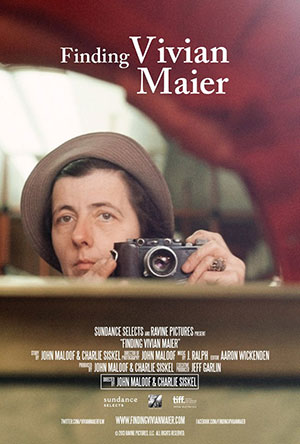


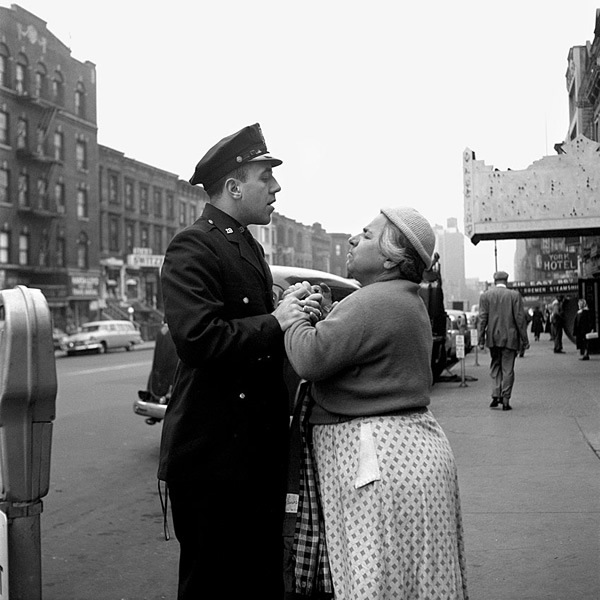


 Sundance
Film Festival, Grand Jury Prize, 2008
Sundance
Film Festival, Grand Jury Prize, 2008