|
|
|
A Cultural Odyssey |
|
|
|
|
|
Lois Siegel
Filmmaker/Photographer |
|
|
|
You’ve seen many cookbooks. Do you
know how they are put together? How many recipes go into a cookbook? What
is involved if the cookbook features recipes from countries around the
world? How are these recipes gathered? How do cookbook writers combine
family life with writing cookbooks? Their cookbook titles are enticing: “Seductions of Rice,” “Hot Sour Salty Sweet: A Culinary Journey through Southeast Asia,” “Flat Breads and Flavors: A Baker’s Atlas,” “Home Baking: The Artful Mix of Flour and Tradition around the World.” And the recipes are divine: Shrimp in Hot Lime Leaf Broth, Lao Yellow Rice and Duck, and Hui Beef Stew with Chick Peas and Anise.
The film follows Jeffrey and Naomi as they work on their next cookbook: “Mangoes and Curry Leaves,” a book that we learn requires 200 recipes and will take them to the Indian Subcontinent, half-way around the world. They don’t always travel together because they have school-aged kids. They divvy up the work: one travels to one part of a country at one time, the other to another part at another time. Someone has to stay home with the kids, but sometimes they travel as a family.
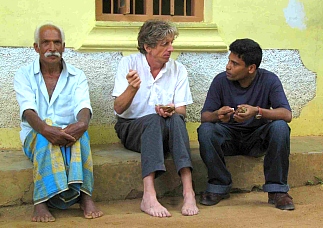
The film follows Jeffrey in Kandy, Sri Lanka where he visits an illegal market. The market is raided every day. The people run, but they come back the next day to continue selling their wares. Jeffrey says, “The more you make yourself vulnerable, the more good things happen.” Food becomes an element of transaction and social life. The cookbooks are the witnesses of these people’s lives. The books are impressionistic views of other worlds through food, stories and photographs. The recipes themselves are a different kind of challenge. They reflect where they have originated.
Jeffrey and Naomi gather recipes on their travels and then finish their work at home. They test each recipe: 95% of the cooking is done at home. The recipes they choose have to be user-friendly. Their job is to translate the ingredients and details of the recipe to others. They make adjustments after a trial and error period with each dish. There are always recipes that don’t turn out. Then they have to decide the order in which the recipes will appear in the book and what stories about their travels to include.
And finally they worry, will their publisher at Random House Canada like the book. The photography in the film is sensitive to the people we see, and you will discover a fascinating journey about these talented writers who create award-winning cookbooks as a two-person team on a food and culture odyssey around the world. |
|
|
|
|