|
|
|
|
Calvin Sieb |
|
|
|
|
|
|
|
|
|
|
|
The Development of a Violinist
|
|
| Montreal Symphony Orchestra | |
|
And, of course, there were always guest artists performing. I met them all.
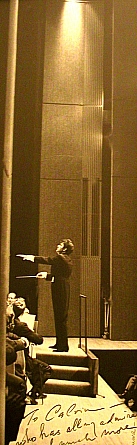
My role as concertmaster was to support the conductor and play as well as possible. I enjoyed working with each conductor with the exception of only one whom I found to be very precise but unemotional when conducting a performance. The main goal of music is to exploit the emotions of the music so that the audience is “moved” by the emotions that the composer has put into his compositions. When one conductor only mechanically beats the time and does not seem to feel any emotion in the music, the musicians are not moved to play the emotions.
The main responsibility of the conductor is to build the best team with the best players, thus hiring the best musicians available to lead that team. The team has to perform, as a unit, the conductor’s interpretation of the music and has to be able to convey emotions written into the music by the composer. To be a musician in an orchestra under a conductor who achieves that is fulfilling and gratifying for each individual in the group
Three things were great about playing in the MSO. Because I was constantly playing, I was learning outstanding repertoire. The greatest exploitation of music is found in the symphonic works and the instrumental concerti. I was playing alongside the best, world-famous invited artists, thus I was learning, consciously, what makes an artist different from the ordinary, and I was learning, unconsciously, by osmosis, to recognize what real artistry is. I also had the chance to receive on-the-job training that helped me evolve into becoming a professional world-class concertmaster.
|
|
|
Web Page Design by
Lois Siegel |
|
|
|





 |
|

